Deck Building Cost – Average Prices + Saving Tips [2026 Data]
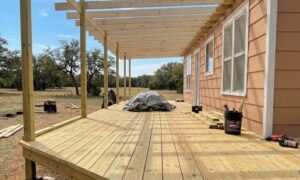
Building a new deck costs $8,321 on average in 2026, with most homeowners spending between $4,339 and $12,653. According to Angi’s 2026 deck cost data, those figures come from more




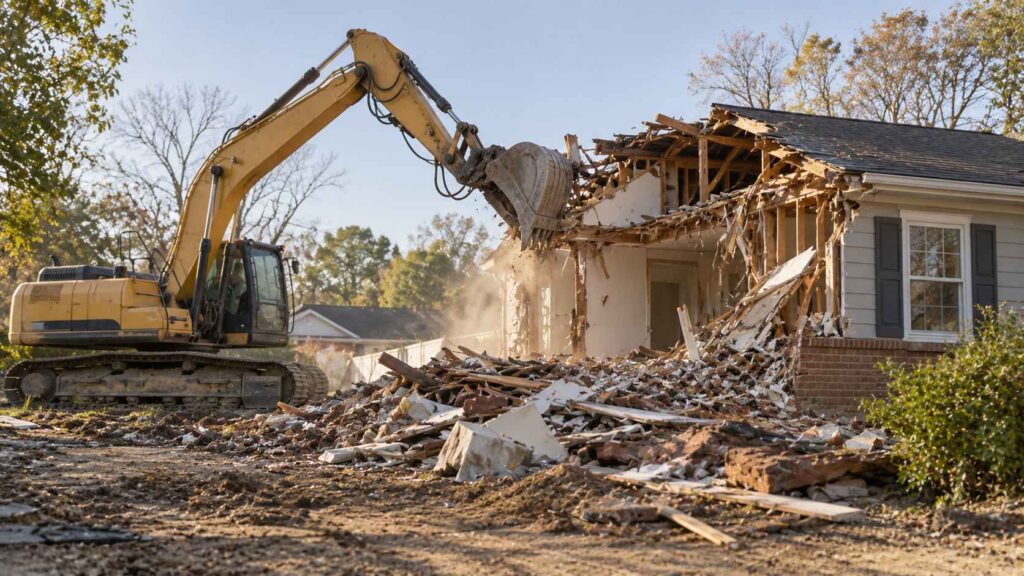

The average cost to demolish a house in 2026 is approximately $15,800, with most homeowners paying between $6,000 and $25,000. Demolition typically costs $4 to $17 per square foot, depending on the home’s size, construction materials, location, and accessibility.
Removing an older house can be relatively straightforward when the property has clear access and no hazardous materials. However, foundations, asbestos removal, utility disconnections, and disposal fees can quickly push the final bill higher.
If you’re planning to knock down a house, we’ll explain current demolition prices, the expenses homeowners frequently overlook, and the cheapest ways to clear a property without cutting corners on safety.

According to Angi’s October 2026 cost estimates, professional house demolition averages $15,800 nationally.
The typical price range is 6,000–25,000, although complicated projects can reach $50,000 or more.
| Demolition cost category | Estimated price |
|---|---|
| National average | $15,800 |
| Typical total cost | 6,000–25,000 |
| Cost per square foot | 4–17 |
| Lower-cost projects | Around $4,800 |
| Expensive or complex projects | $50,000+ |
The wide range makes sense when you consider what demolition actually involves.
A small wooden house with a crawl space and plenty of room for an excavator costs considerably less to remove than a two-story brick home surrounded by neighboring buildings.
We recommend treating national averages as an initial budget reference. The contractor’s assessment of the actual property matters much more than any generalized demolition calculator.


For a more specific estimate, multiply the home’s square footage by the expected demolition rate.
| House size | Estimated demolition cost |
|---|---|
| 800 sq. ft. | 3,200–13,600 |
| 1,000 sq. ft. | 4,000–17,000 |
| 1,500 sq. ft. | 6,000–25,500 |
| 2,000 sq. ft. | 8,000–34,000 |
| 2,500 sq. ft. | 10,000–42,500 |
| 3,000 sq. ft. | 12,000–51,000 |
Estimates calculated using 4–17 per square foot. Actual quotes depend on what demolition, removal, and site preparation services are included.
For example, demolishing a 1,500-square-foot house at $8 per square foot would cost approximately $12,000.
One important detail is how contractors measure the building. A two-story home can have the same total floor area as a single-story house but a smaller foundation footprint. That difference affects the equipment, debris volume, and excavation work required.

Square footage matters, but it doesn’t tell the whole story. Several expenses can substantially change the total cost of knocking down a house.
Wood-frame houses are generally easier to demolish than buildings constructed primarily from brick, concrete, or reinforced masonry.
Heavier materials require more equipment work and generate debris that can be expensive to transport.
A house’s condition also matters. Fire-damaged or structurally unstable buildings require additional precautions because walls and floors can collapse unexpectedly.
Under OSHA’s demolition requirements, a competent person must conduct an engineering survey before employees begin demolition operations.
Removing the structure above ground doesn’t necessarily mean the property is ready for construction.
According to Angi’s 2026 estimates, foundation removal can add approximately 1,000–5,000, depending on the foundation and project conditions.
Deep basement foundations can cost considerably more because contractors must break up concrete, excavate materials, haul debris, and potentially backfill and compact the excavation.
If you’re rebuilding, ask whether the existing foundation can remain. However, don’t assume an old foundation is suitable for a new house without an appropriate professional evaluation.

Older homes can contain asbestos in insulation, flooring, siding, roofing, and other materials. Lead-based paint is another concern, particularly in homes built before 1978.
Hazardous-material testing and removal can add thousands of dollars to a demolition project.
The EPA’s asbestos demolition guidance explains the applicable federal requirements. State and local inspection and abatement rules can be stricter, including for single-family homes.
We strongly recommend identifying these issues before accepting a contractor’s final price. Discovering asbestos after demolition work has been scheduled can create expensive delays.

Demolition permits frequently cost several hundred dollars, although exact charges depend on the municipality.
Homeowners must also arrange for electricity, gas, water, and other utilities to be properly disconnected or secured.
Utility work can become particularly expensive when underground lines need excavation or work extends into a public street.
Another common expense is preparing documentation for a demolition permit, including a site plan showing the structure being removed and relevant surrounding property features.

A house surrounded by open land provides room for excavators, trucks, and dumpsters.
A property squeezed between neighboring houses is different. Contractors might need smaller machinery, additional labor, traffic controls, or protective barriers.
Debris disposal is another significant cost.
Angi estimates cleanup and disposal expenses of approximately 300–1,800 for common projects, although large volumes of concrete and other materials can cost substantially more.
Always ask whether debris hauling, landfill fees, and final site cleanup are included in the demolition quote. A cheaper estimate becomes less attractive when those services are billed separately.

For most accessible houses, professional mechanical demolition is the most economical full-demolition method.
An excavator can remove a structure much faster than workers dismantling every component manually.
However, equipment choice alone doesn’t guarantee the lowest final price. We recommend comparing the following opportunities to reduce costs.
Different demolition companies can quote surprisingly different prices for the same property.
Request estimates that separately identify structural demolition, foundation removal, utility work, debris disposal, permits, and final grading.
The lowest initial quote isn’t necessarily the cheapest completed project.
Doors, cabinets, fixtures, hardwood flooring, and certain metal components may have resale or reuse value.
Selling or donating suitable items before demolition can reduce waste and potentially offset part of the bill.
The EPA recommends salvaging and reusing building materials whenever practical.
Have hazardous materials assessed first, and coordinate any removal with your contractor. Structural components and potentially contaminated materials should not become DIY salvage projects.
Deconstruction involves carefully dismantling a building to recover reusable materials.
Full deconstruction generally requires more labor and can be more expensive than mechanical demolition. However, selectively removing valuable materials before bringing in an excavator can be a sensible compromise.
We favor comparing the net cost after realistic salvage proceeds rather than assuming reclaimed materials will pay for the entire project.
Homeowners can potentially reduce labor costs by clearing furniture, personal belongings, and ordinary loose items before contractors arrive.
Avoid attempting structural demolition, utility disconnections, asbestos removal, or other hazardous work yourself.
Renting heavy machinery to demolish an entire house isn’t a practical money-saving strategy for most homeowners.
If you’re replacing the existing house, retaining a structurally suitable foundation could reduce demolition and rebuilding expenses.
However, the foundation must meet the requirements of the proposed construction. Have its condition, dimensions, and structural capacity evaluated before deciding to keep it.
When demolition is followed by new construction, ask the demolition contractor and builder to coordinate excavation, hauling, grading, and site access.
Combining compatible work can prevent duplicated equipment mobilization and unnecessary site preparation.
Before committing, verify the requirements for the replacement building through your local permitting office.

Traditional demolition is generally cheaper when the main objective is clearing the property quickly.
Deconstruction is slower because workers carefully remove materials rather than destroying the entire structure with heavy machinery.
The advantage is material recovery. High-quality lumber, architectural features, and reusable fixtures can have meaningful value.
Deconstruction is also mandatory for certain properties in some jurisdictions.
For example, Portland’s residential demolition rules require qualifying houses built in 1940 or earlier, along with certain historic properties, to undergo deconstruction by certified contractors.
Before selecting the cheapest demolition method, check whether local preservation or deconstruction requirements restrict your options.

Not every project requires removing an entire house. Smaller buildings can cost considerably less to demolish.
Based on Angi’s 2026 estimates, common price ranges include:

Partial house demolition is another option when removing an addition, porch, or damaged section.
However, removing part of an occupied building requires protecting the remaining structure, weatherproofing exposed surfaces, and potentially installing temporary supports.
These additional tasks can make partial demolition surprisingly expensive relative to the area removed.

Most full residential demolitions require approval from the local building department. Requirements vary by jurisdiction, but homeowners commonly need a demolition application, property information, utility-disconnection documentation, and an appropriate site plan.
Some departments also require asbestos documentation, erosion-control measures, tree protection, or additional structural information.
For example, Portland requires a residential demolition permit for structures that originally required building permits, including structures built without the necessary approval.
A site plan helps the building department understand which structures will be removed and what remains on the property.
Depending on local requirements, it can identify property boundaries, setbacks, driveways, nearby buildings, and other relevant site features.
At Get a Site Plan, we prepare non-certified plans remotely using available GIS, satellite imagery, property records, and customer-provided information.
Our site plans for permits can support demolition applications when the permitting authority accepts non-certified drawings.
Some projects require a certified survey, engineered demolition plan, or other documents prepared by licensed professionals. We don’t replace those services or issue permits.

Demolition isn’t necessarily finished when the last wall comes down. Contractors may still need to remove foundation materials, dispose of remaining debris, fill excavations, and grade the lot.
If you’re building a replacement house, the new design must satisfy applicable zoning, setback, drainage, and construction requirements.
We recommend checking those restrictions before demolishing the existing building. Removing a house doesn’t automatically guarantee permission to construct another one with the same footprint or dimensions.
A new house building permit site plan can help illustrate the proposed building’s position, setbacks, driveway, and other relevant property features when non-certified plans are permitted.
Remember that the cost of demolishing a house is separate from the cost of constructing its replacement.
The physical demolition of a typical house can take one to several days, depending on its size, materials, and accessibility.
The overall project usually takes longer because permits, inspections, utility disconnections, hazardous-material work, and site cleanup must also be completed.
A homeowner may be legally permitted to perform certain demolition activities, depending on local rules. However, tearing down an entire house is dangerous and generally best handled by insured professionals.
Structural instability, utility connections, hazardous materials, and heavy equipment create risks that outweigh potential DIY savings.
Renovation can be cheaper when the foundation, framing, and major systems remain in good condition.
Demolition becomes more attractive when extensive structural deterioration makes repairs uneconomical, especially if the owner wants an entirely different building layout.
Compare complete renovation costs against demolition, site preparation, and rebuilding expenses before deciding.

Building a new deck costs $8,321 on average in 2026, with most homeowners spending between $4,339 and $12,653. According to Angi’s 2026 deck cost data, those figures come from more

A general contractor manages the construction side of a project from pre-construction through completion. The job usually includes coordinating subcontractors, ordering materials, managing schedules, handling inspections and permits when required

Architectural section drawings show a building as if it were cut vertically and opened up for inspection. They reveal information that floor plans and exterior elevations cannot show clearly, including
