
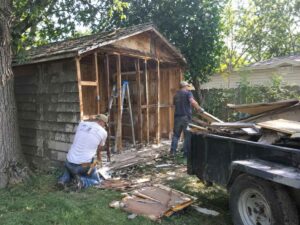
Cost of Shed Removal [2026 Data]
Professional shed removal costs between $250 and $3,000 in 2026, depending on the shed’s size, construction materials, condition, and accessibility. Removing a shed together with its concrete foundation can increase




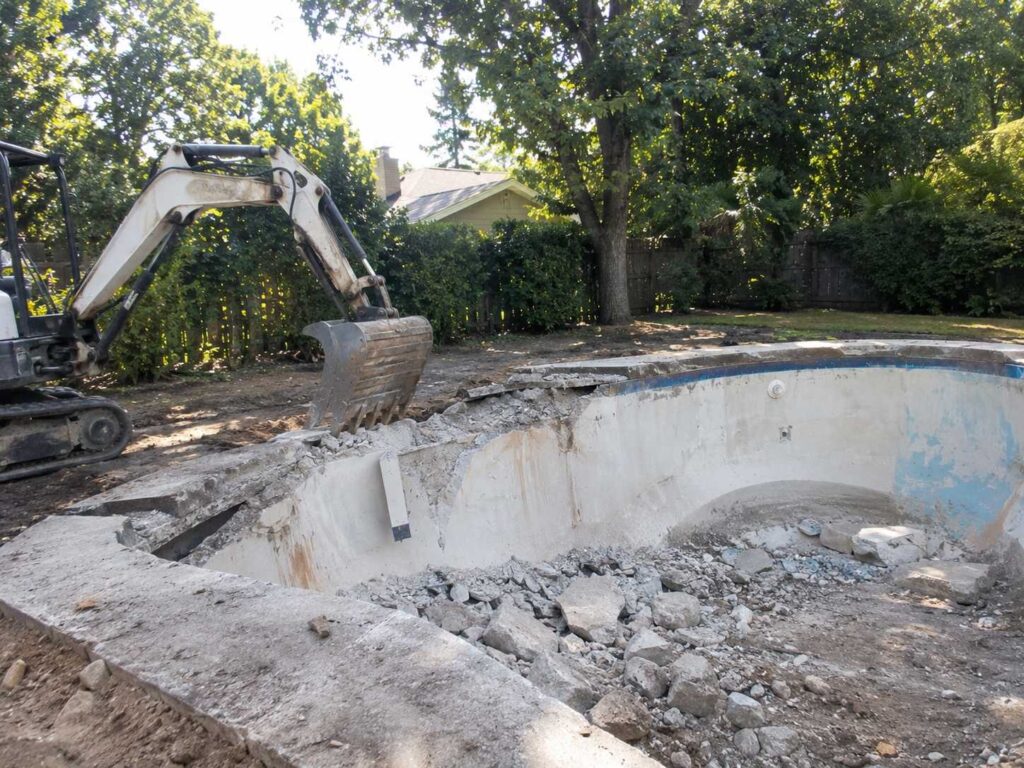
Removing an old swimming pool can free up valuable backyard space, reduce maintenance expenses, and create opportunities for landscaping or outdoor construction. The process generally involves partial removal, complete demolition, or dismantling an above-ground pool, depending on the structure and your plans for the property.
Partial removal is typically cheaper, while complete demolition offers greater flexibility for future land use. Both methods require careful attention to drainage, soil compaction, and local regulations.
At Get a Site Plan, we prepare non-certified site plans for demolition permit applications. We’ll explain how pool removal works, what each method costs in 2026, and how to make practical use of the space afterward.

An unused swimming pool can become an expensive feature to maintain, particularly when equipment and surfaces begin deteriorating.
Common reasons for pool removal include:
Before choosing demolition, consider whether repairing or remodeling the existing pool would better suit your budget and long-term plans.

For inground swimming pools, there are two main demolition approaches. The appropriate choice depends on local regulations, the pool’s construction, and your intended use of the land.
| Feature | Partial Removal | Complete Removal |
|---|---|---|
| Demolition work | Upper walls removed; portions of the shell remain | Entire pool structure removed |
| Cost | Generally lower | Generally higher |
| Backfilling | Required | Required |
| Future construction | Often restricted | May be possible with proper approval |
| Soil settlement risk | Depends on drainage and compaction | Depends on backfill and compaction |
| Best suited for | Lawns and approved landscaping | Projects requiring greater land-use flexibility |
Partial removal, sometimes called filling in a pool, involves demolishing the upper portion of the structure while leaving part of the shell underground.
The contractor typically breaks openings in the bottom for drainage, removes the required wall sections, and fills the cavity with approved materials.
The fill must be placed and compacted according to local requirements.
Although partial removal can save money, buried concrete and improperly compacted soil can complicate future construction. Some jurisdictions prohibit this method or impose restrictions on how the area can be used.
Complete removal involves demolishing and extracting the entire swimming pool, including its walls, floor, and associated components.
After the debris is hauled away, the excavation is filled with suitable material, compacted, and graded.
Full removal is generally preferable when homeowners anticipate future construction or want to eliminate buried pool structures.
However, complete demolition does not automatically make the land suitable for building. Soil conditions, compaction records, foundation requirements, and municipal approval still determine what can be constructed.
Above-ground pools are generally easier to dismantle because extensive excavation is unnecessary.
The process includes draining the water, disconnecting equipment, removing the liner and supporting frame, and disposing of the materials.
A contractor may also need to remove decking, concrete pads, or electrical connections.


A typical professional pool demolition follows six stages.
Pool drainage deserves particular attention. The EPA’s pool water efficiency guidance advises checking local discharge regulations before releasing pool water into sanitary sewers, storm drains, or onto the property.
Improper drainage can damage neighboring properties or introduce pool chemicals into waterways.

Pool removal commonly requires a demolition or building permit, although requirements vary by jurisdiction.
Local building departments may regulate demolition methods, backfill materials, drainage, inspections, and soil compaction testing.
For example, the City of San Diego’s demolition requirements specify a final soil compaction report prepared by a licensed geotechnical or civil engineer when removing a swimming pool deeper than five feet.
Before starting demolition, check:
Our demolition permit guide covers the general application process.
Some building departments require a site plan showing the existing pool, nearby structures, property boundaries, and demolition area.
A drawing may also identify access routes, utility locations, and structures that will remain.
We can prepare a site plan for demolition permits using available property records and information you provide.
Our plans are non-certified and do not replace surveys, engineering documents, or geotechnical reports when those are required. The local permitting authority determines which documents are acceptable.

According to Angi’s October 2026 cost estimates, professional inground pool removal typically falls within the following ranges:
| Removal Method | Estimated Cost |
|---|---|
| Partial inground pool removal | $2,500–$10,000 |
| Complete inground pool removal | $4,000–$16,000 |
| Above-ground pool removal | $475–$2,500 for most projects |
Actual prices depend on pool dimensions, construction materials, accessibility, labor rates, and disposal requirements.
Concrete and gunite pools generally require more substantial demolition equipment than lightweight above-ground structures.
Additional expenses can include permit fees, concrete deck removal, utility disconnection, soil compaction testing, and landscaping.
Obtain at least three itemized estimates, and confirm whether hauling, backfilling, and site restoration are included.

Once the pool is removed, the backyard can serve an entirely different purpose. The best option depends on your budget, soil conditions, and how you want to use the property.
A patio provides space for outdoor dining, seating, and entertaining.
Concrete, pavers, and natural stone are common options. Before installation, confirm that the filled area has adequate compaction and drainage to support the proposed surface.
If the project requires approval, a patio permit site plan can help document its proposed location and dimensions.
The former pool area can become a lawn, flower garden, or vegetable-growing space.
For planting, pay particular attention to the quality and depth of the topsoil. Backfill used for structural stability may not provide suitable growing conditions.
Raised garden beds can offer greater control over soil composition.
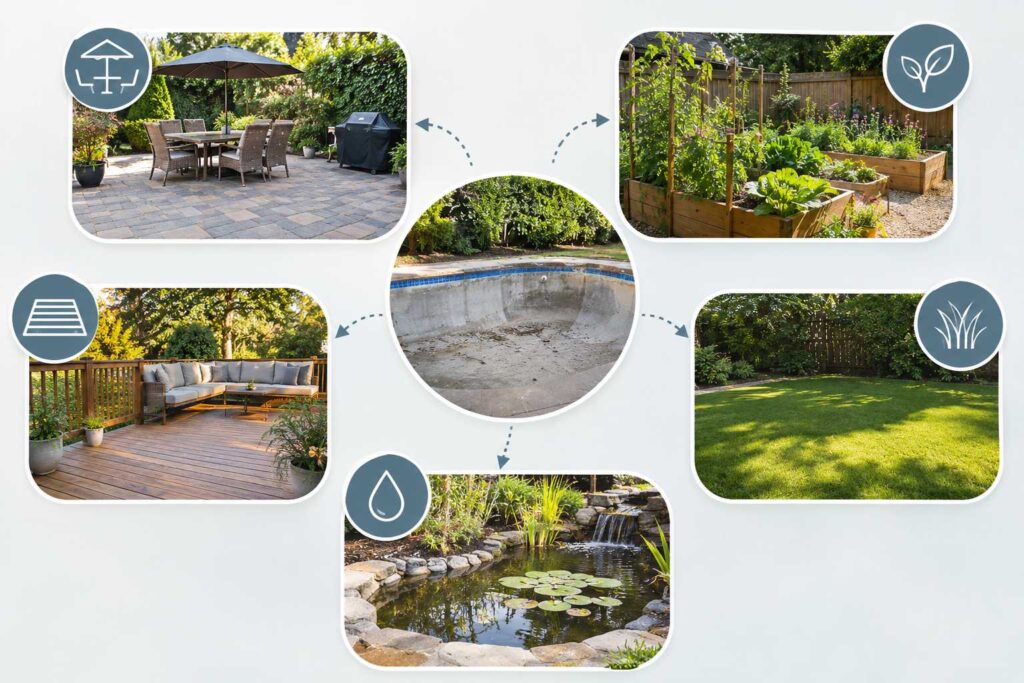
A wooden or composite deck can create an outdoor seating area while connecting different parts of the yard.
The design must account for soil stability, drainage, structural loads, and foundation placement.
If the pool was only partially removed, have the proposed foundation assessed before proceeding.
Restoring the space to grass is one of the simplest options after demolition.
Once grading and soil preparation are complete, homeowners can install sod or seed the area.
The result can provide more room for children, pets, or everyday outdoor activities without introducing another major structure.
If you haven’t committed to demolition, converting the existing pool into a decorative pond may be worth considering.
The project generally requires changes to circulation, filtration, and water treatment.
A pond also introduces ongoing maintenance and potential safety requirements, so it should be evaluated separately from complete pool removal.
Simply dumping soil into an intact pool is generally inappropriate. Approved partial removal usually involves removing sections of the shell, providing drainage, and compacting the backfill. Local regulations determine the permitted method.
A straightforward partial removal may take several days, while complete demolition can take a week or longer. Pool size, access, weather, inspections, and soil preparation affect the schedule.
Construction over a former pool may be possible, but the site must satisfy applicable engineering and building requirements. Areas with buried pool structures or poorly compacted fill may be unsuitable without additional work.
Disclosure obligations vary by state and transaction. Previous pool removal, especially when portions remain buried, may be relevant to property condition disclosures. Keep permits, inspection records, and compaction reports.
Fiberglass pools typically require complete shell removal rather than conventional partial demolition. The shell may be lifted out or cut into sections, depending on its condition and site accessibility.


Professional shed removal costs between $250 and $3,000 in 2026, depending on the shed’s size, construction materials, condition, and accessibility. Removing a shed together with its concrete foundation can increase
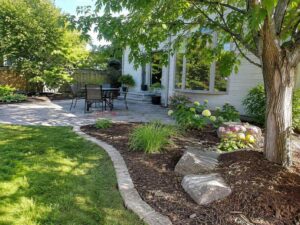
Landscaping costs an average of $3,517 in 2026, with most homeowners spending between $1,248 and $6,068, according to Angi’s latest landscaping cost data. A complete new landscape installation typically costs
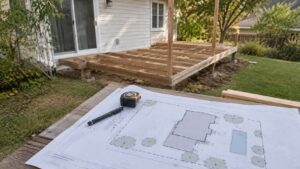
A plot plan is a scaled drawing of a property showing its boundaries, existing buildings, proposed improvements, and distances between important features. Homeowners use plot plans for building permits, zoning
