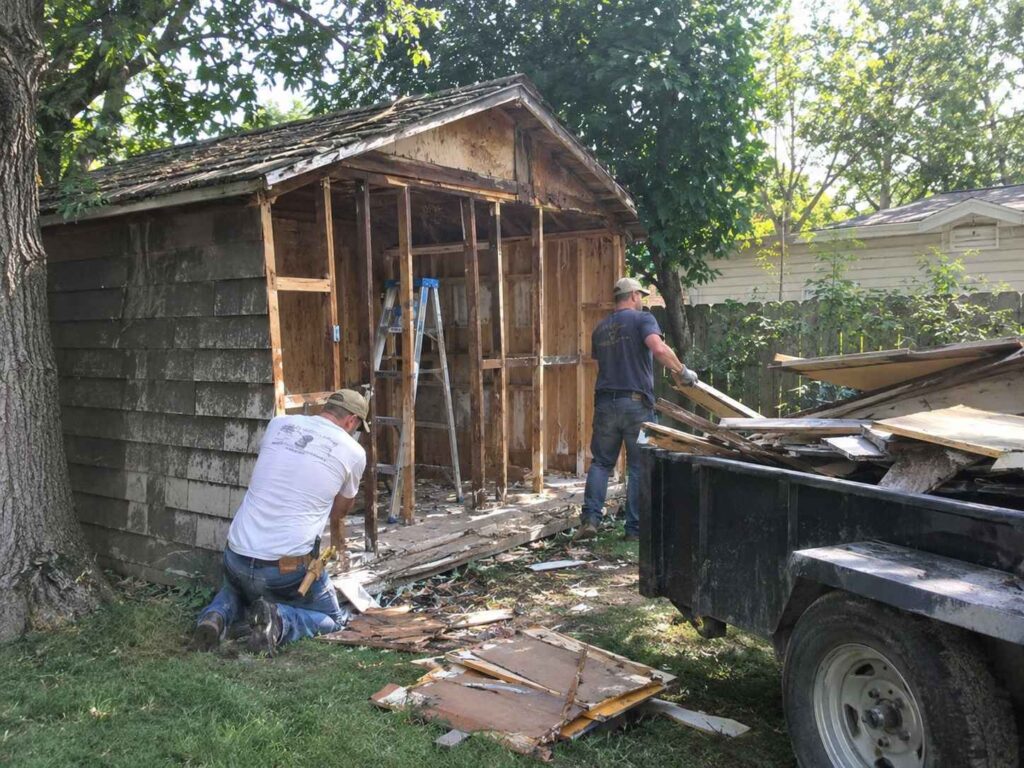
Professional shed removal costs between $250 and $3,000 in 2026, depending on the shed’s size, construction materials, condition, and accessibility. Removing a shed together with its concrete foundation can increase the total to $3,500 or more.
Most contractors charge approximately $3.50 to $11.50 per square foot, although smaller projects often have minimum service fees.
Additional expenses may include debris disposal, utility disconnection, permits, and yard restoration.
At Get a Site Plan, we prepare non-certified site plans for projects that may require demolition permits. We’ll explain what affects shed removal costs, how to estimate your budget, and where you can save money.
The following table estimates demolition and removal costs using typical square-foot pricing.
Shed Size
Square Footage
Estimated Removal Cost
8 × 10 ft.
80 sq. ft.
$280–$920
10 × 12 ft.
120 sq. ft.
$420–$1,380
10 × 16 ft.
160 sq. ft.
$560–$1,840
12 × 20 ft.
240 sq. ft.
$840–$2,760
12 × 24 ft.
288 sq. ft.
$1,010–$3,310
Estimates reflect typical per-square-foot removal rates. Concrete foundations, hazardous materials, and other services may cost extra. Minimum contractor fees can also affect smaller projects.
A simple 8 × 10-foot wooden shed with easy access will generally cost considerably less to remove than a large structure with brick walls and a reinforced concrete foundation.
For additional perspective, HomeGuide’s shed removal estimates place demolition with concrete slab removal at approximately $1,200 to $3,500.
What Affects Shed Removal Costs?
Shed size, construction materials, foundation type, and site accessibility influence removal costs.
Shed dimensions provide a useful starting point, but several other factors determine the contractor’s final quote.
1. Shed Size and Construction Materials
Larger sheds require more demolition work and produce more debris. Construction materials also influence the time, equipment, and disposal methods needed.
Wood: Standard wooden sheds are usually relatively straightforward to dismantle, although heavy framing and deteriorated roofing can complicate removal.
Metal: Lightweight metal sheds may be easier to disassemble, but rusted fasteners and sharp panels create additional safety concerns.
Vinyl and plastic: Smaller prefabricated sheds often have removable panels, potentially reducing labor.
Brick and concrete block: Masonry sheds typically require heavier demolition equipment and generate substantial amounts of debris.
A contractor should inspect the structure before providing a fixed price, especially if it was custom-built.
2. Foundation Type
The foundation can substantially increase demolition expenses.
Sheds supported by wooden skids, concrete blocks, or compacted gravel are generally easier to remove than structures built on concrete slabs.
Concrete demolition typically adds $2 to $6 per square foot, depending on thickness, reinforcement, accessibility, and disposal requirements.
For a 10 × 12-foot shed, removing a 120-square-foot concrete slab could add approximately $240 to $720 to the project.
If the existing slab is suitable for a replacement shed, keeping it may reduce unnecessary demolition expenses.
3. Location and Accessibility
A shed located beside a driveway is usually easier to remove than one at the back of a property with narrow access.
Contractors may charge more when workers must:
Carry debris over long distances.
Dismantle the shed entirely by hand.
Protect nearby fences, landscaping, or structures.
Use smaller equipment because larger machinery cannot enter the yard.
Access restrictions become particularly important when demolishing masonry structures or removing concrete foundations.
4. Shed Condition
An unstable shed may require more careful demolition.
Rotten wooden framing, damaged roofs, and severely corroded metal can increase the risk of uncontrolled collapse.
A structurally sound shed may take longer to dismantle if materials are being preserved for reuse, but it may also be suitable for relocation or resale.
Additional Shed Demolition Expenses
Debris disposal, utility disconnection, and other site requirements can increase the total removal budget.
Contractor estimates sometimes cover demolition and hauling together. Other companies itemize the work separately.
Additional Expense
Typical Cost or Consideration
Debris removal
$300–$1,800 if separately charged
Concrete removal
$2–$6 per sq. ft.
Demolition permit
Often $100–$500 when required
Utility disconnection
Depends on connections and local contractor rates
Yard restoration
Depends on grading, soil, and landscaping work
Important: Disposal fees are frequently included in advertised removal prices. Avoid adding them twice when calculating your budget.
Utility Disconnection
Sheds with electricity, water, or gas connections require additional preparation.
Arrange any necessary disconnection with the appropriate qualified professional or utility company before scheduling demolition.
Hazardous Materials
Older sheds may contain asbestos-containing roofing or siding, lead-based paint, or improperly stored chemicals.
Such materials can increase costs because they may require professional assessment, specialized handling, and approved disposal.
The EPA’s demolition guidance recommends practices that minimize lead-contaminated dust, even during total demolition.
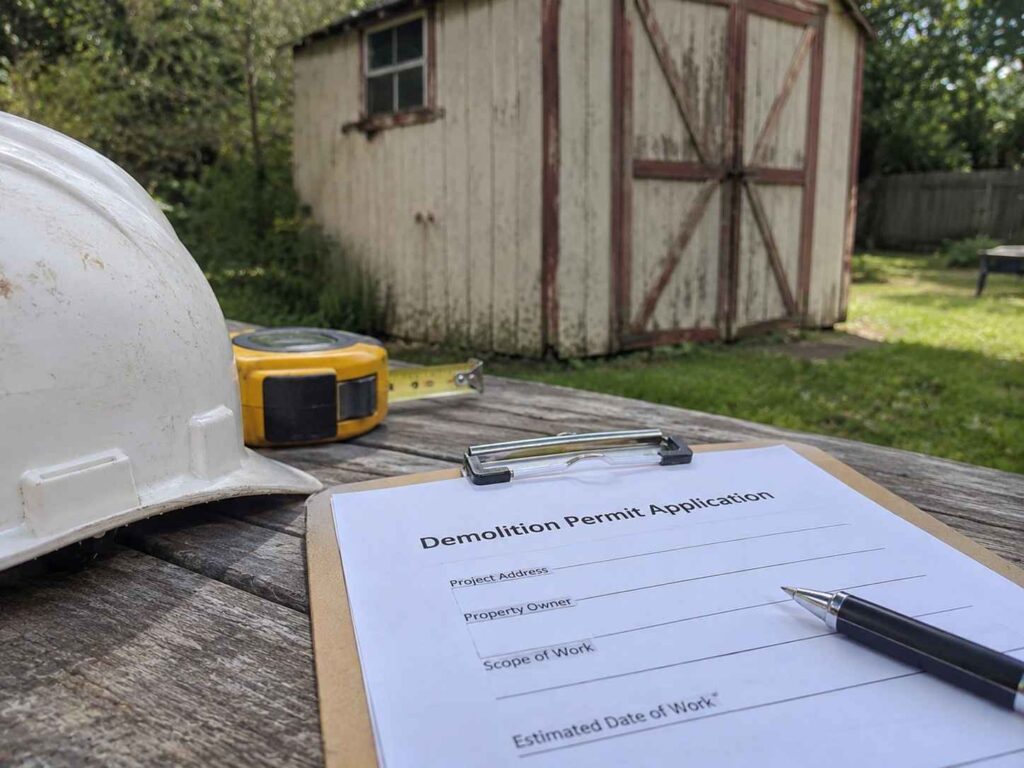
Do You Need a Permit to Remove a Shed?
Some municipalities require proof of utility disconnection before issuing final approval for a demolition project.
A demolition permit is not always required to remove a shed. Requirements depend on the municipality, structure size, foundation, and sometimes the presence of utilities.
For example, Seattle’s demolition permit rules exempt certain single-story accessory structures with a roof area smaller than 120 square feet when supported by pier blocks or a slab on grade.
Other jurisdictions have different exemptions and application requirements.
Before removing your shed, contact the local building department to establish:
Whether a demolition permit is required.
What documents must accompany the application.
Whether utility disconnection or additional inspections are necessary.
Our drawings are non-certified, and local authorities determine whether they are acceptable. Projects requiring a certified survey or licensed professional’s documentation need those services separately.
DIY Shed Removal vs. Hiring a Contractor
Removing a small, freestanding shed yourself can reduce labor expenses, but you will still need to account for tools, protective equipment, debris transport, and disposal.
DIY removal is generally more practical for lightweight sheds with accessible fasteners, no utility connections, and no suspected hazardous materials.
Professional demolition is a better choice for structures with:
Concrete or masonry construction.
Significant structural deterioration.
Electrical, plumbing, or gas connections.
Suspected asbestos or other hazardous materials.
Limited access or nearby structures at risk of damage.
For a straightforward prefabricated shed, dismantling the panels may be manageable. A large wooden shed with a sagging roof presents considerably greater risks.
How to Save Money on Shed Removal
Planning ahead, comparing contractor quotes, and reusing materials can help reduce shed removal expenses.
Several practical decisions can help keep the project within budget.
Empty the shed before requesting removal. Contractors may charge extra to dispose of furniture, equipment, and stored household items.
Compare at least three itemized quotes. Ask each contractor to specify whether demolition, hauling, foundation removal, permits, and final cleanup are included.
Consider selling or donating the structure. A shed in good condition may be worth relocating rather than destroying.
Separate recyclable materials. Metal components, reusable lumber, and certain concrete materials may qualify for recycling. The EPA’s construction waste guidance recommends salvaging usable components whenever practical.
Keep a usable foundation. If the slab remains sound and meets the requirements for your future project, removing it may be unnecessary.
Avoid cutting costs by taking on structural demolition or hazardous-material removal without appropriate expertise.
What Happens After Shed Removal?
Once demolition is complete, inspect the cleared area for nails, broken concrete, exposed anchors, and uneven ground.
You may need to add topsoil, restore drainage, or regrade the surface before installing grass or another outdoor feature.
If you’re planning to replace the shed, confirm local setbacks, lot coverage limits, and permit requirements first.
A site plan for a new shed can help document its proposed location and dimensions before you submit a permit application.
FAQs
Removing a 10 × 12-foot shed typically costs approximately $420 to $1,380 based on 2026 square-foot estimates. Concrete foundation removal, restricted access, and additional services may increase the total.
For a structurally sound prefabricated shed, relocation may be worthwhile, particularly if you want to reuse or sell it. Demolition is often more practical when the structure is heavily damaged or cannot be transported intact. Compare quotes for both options.
Not necessarily. Some contractors quote only for dismantling the structure and hauling away its debris. Always confirm whether slab demolition and concrete disposal are included.
A small, uncomplicated shed may be dismantled and removed within a day by an experienced crew. Larger structures, difficult access, concrete foundations, or hazardous-material work can extend the project.
Some municipalities exempt small detached sheds from demolition permits, while others require approval. Check with your local building department before beginning work.
Our Design & Drafting Team consists of experienced CAD designers specializing in site plans, floor plans, elevations, and property drawings for residential and commercial projects.
Our content is based on hands-on drafting experience and the real-world questions we encounter while helping property owners, contractors, and professionals prepare drawings for permits, HOA submissions, and project planning.
Removing an old swimming pool can free up valuable backyard space, reduce maintenance expenses, and create opportunities for landscaping or outdoor construction. The process generally involves partial removal, complete demolition,
Landscaping costs an average of $3,517 in 2026, with most homeowners spending between $1,248 and $6,068, according to Angi’s latest landscaping cost data. A complete new landscape installation typically costs
A plot plan is a scaled drawing of a property showing its boundaries, existing buildings, proposed improvements, and distances between important features. Homeowners use plot plans for building permits, zoning