
How Much Does Landscaping Cost in 2026?
Landscaping costs an average of $3,517 in 2026, with most homeowners spending between $1,248 and $6,068, according to Angi’s latest landscaping cost data. A complete new landscape installation typically costs




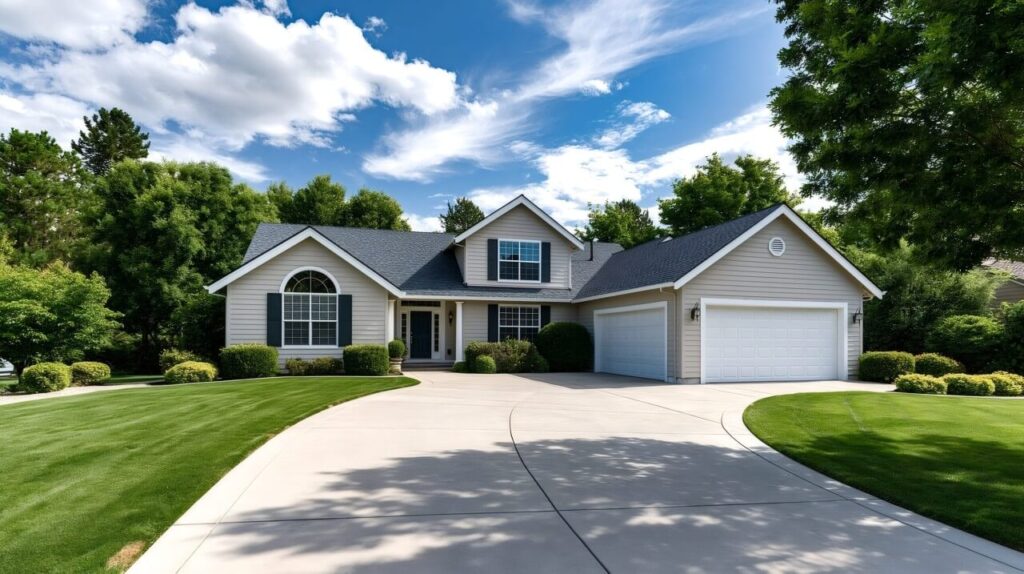
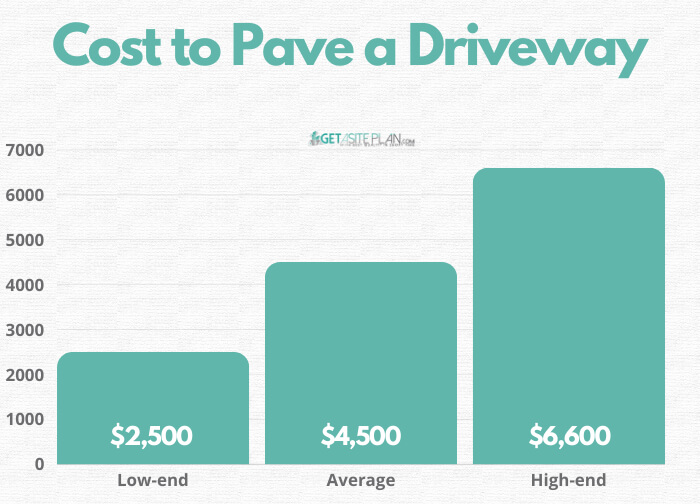
The average cost to pave a driveway in 2026 is approximately $4,900, with most homeowners spending between $2,500 and $7,300.
Asphalt paving typically costs $7 to $13 per square foot, concrete costs $8 to $18, and a professionally installed gravel driveway generally costs $4 to $10 per square foot.
According to Angi’s 2026 driveway cost data, driveway size, material selection, and site preparation are the biggest factors affecting the final price.
At Get a Site Plan, we prepare non-certified site plans that can support driveway planning and permit applications where accepted.
We don’t perform paving work or issue permits, but we can help document a proposed driveway layout before construction begins.
The material you choose determines much of your initial budget, along with future maintenance expenses.
| Driveway Material | Cost per Sq. Ft. Installed | Cost for 600 Sq. Ft. |
| Blacktop / asphalt | 7–13 | 4,200–7,800 |
| Concrete | 8–18 | 4,800–10,800 |
| Gravel | 4–10 | 2,400–6,000 |
| Concrete or brick pavers | 10–30 | 6,000–18,000 |
These are approximate national installation ranges for planning purposes. Extensive excavation, demolition, drainage work, and unusual site conditions can increase costs.
A new blacktop or asphalt driveway costs approximately $7 to $13 per square foot, including installation. Replacing an existing asphalt driveway typically costs $8 to $15 per square foot when removal and additional preparation are necessary.
Blacktop and asphalt are commonly used interchangeably in residential paving. Both refer to asphalt-based pavement, although individual mixes can differ in aggregate composition and performance.

For homeowners, the advantages include:
Asphalt driveways typically last 15 to 30 years, depending on installation quality, traffic, weather, and maintenance.
The 2026 asphalt cost estimates also place basic resurfacing at approximately $3 to $7 per square foot when the existing pavement and base are suitable.
Concrete driveway installation generally costs $8 to $18 per square foot, although premium finishes can push prices higher.
For a 600-square-foot driveway, that means approximately $4,800 to $10,800.
Concrete offers a firm surface with relatively modest routine maintenance requirements. Properly installed driveways can remain serviceable for 30 to 40 years or longer.
Finish options affect the price considerably. A basic broom finish is usually more affordable than stamped concrete, decorative borders, or elaborate patterns.
According to 2026 concrete driveway pricing, plain finishes can start around $6 to $8 per square foot, while more elaborate treatments may reach $20 per square foot.
Concrete also requires proper joint placement, drainage, and curing. Freeze-thaw conditions and deicing chemicals can damage poorly constructed surfaces.
A professionally installed gravel driveway generally costs $4 to $10 per square foot, including materials and labor for a properly prepared installation.
Basic gravel surfacing on an existing suitable base can cost considerably less, sometimes around $1 to $3 per square foot.
Gravel is especially practical for long rural driveways where covering a large area with asphalt or concrete would be expensive.
However, gravel needs periodic maintenance. Stones can migrate, potholes can develop, and heavy rainfall may cause erosion.
The gravel driveway cost guide highlights excavation, gravel depth, material choice, and ground conditions as major pricing factors.
A gravel driveway can remain usable for decades, but periodic grading and replenishment are part of its ownership cost.
Concrete and brick pavers generally cost $10 to $30 per square foot installed, with premium stone options costing more.
Pavers provide considerable design flexibility and allow individual damaged units to be replaced.
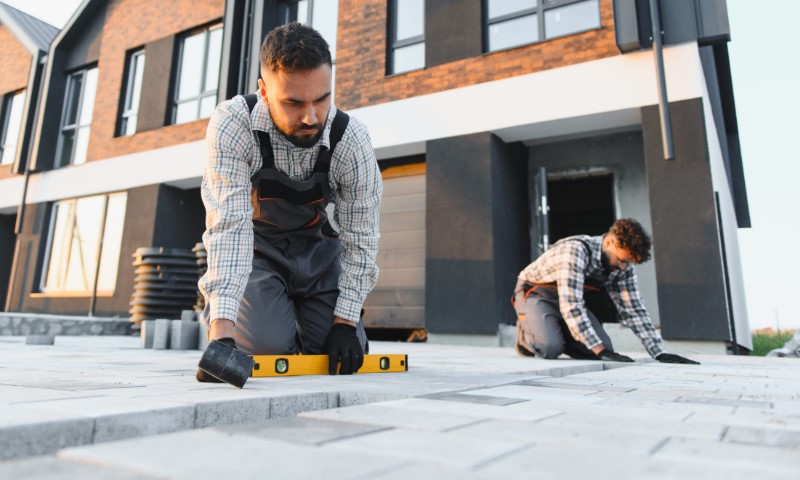
However, installation involves excavation, a compacted base, bedding materials, and careful placement. Labor requirements make pavers one of the more expensive driveway options.
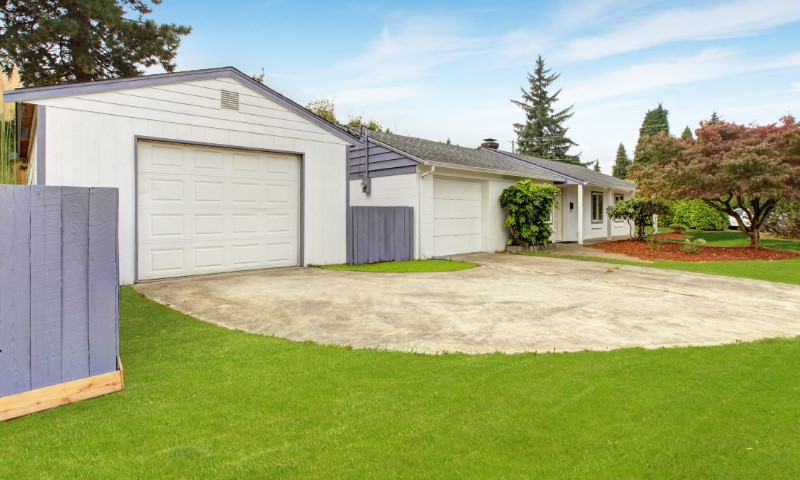
Driveway dimensions directly influence material quantities, excavation requirements, and labor costs.
To estimate the area, multiply the length by the width in feet.
For example, a driveway measuring 20 feet by 30 feet covers 600 square feet.
At $10 per square foot, the estimated paving cost would be $6,000.
| 10 × 20 ft. | 200 sq. ft. | 1,400–2,600 |
| 12 × 24 ft. | 288 sq. ft. | 2,016–3,744 |
| 20 × 20 ft. | 400 sq. ft. | 2,800–5,200 |
| 24 × 24 ft. | 576 sq. ft. | 4,032–7,488 |
Small projects may cost more per square foot because paving contractors often apply minimum equipment and mobilization charges.
If you need additional parking space, compare replacement prices with the cost of extending a driveway before deciding on the scope.
Several expenses can significantly increase the amount quoted for paving.
A driveway needs a properly prepared foundation.
Removing vegetation, excavating unsuitable soil, leveling the ground, and installing a compacted aggregate base all contribute to the cost.
Basic grading may add approximately $1 to $2 per square foot, while difficult terrain, extensive excavation, or unsuitable soil can cost considerably more.
Poor preparation can eventually cause cracking, rutting, sinking, and drainage problems.
The required pavement thickness depends on the material, underlying soil, base construction, and expected vehicle loads.
Residential concrete driveways commonly use approximately 4 inches of concrete, while heavier vehicle loads may justify 5 to 6 inches or an engineered design.
Asphalt thickness requirements also vary according to the supporting base and intended traffic.
Ask contractors to specify the compacted thickness of each layer in their estimates.
Water management deserves attention before paving begins.
A driveway may require a channel drain, culvert, adjusted grading, or other drainage improvements.
Permeable materials are another option. The U.S. Environmental Protection Agency explains how porous asphalt, pervious concrete, and permeable pavers can help manage stormwater through specially constructed underlying layers.
Decorative finishes, retaining walls, driveway aprons, and heating systems can further increase installation expenses.
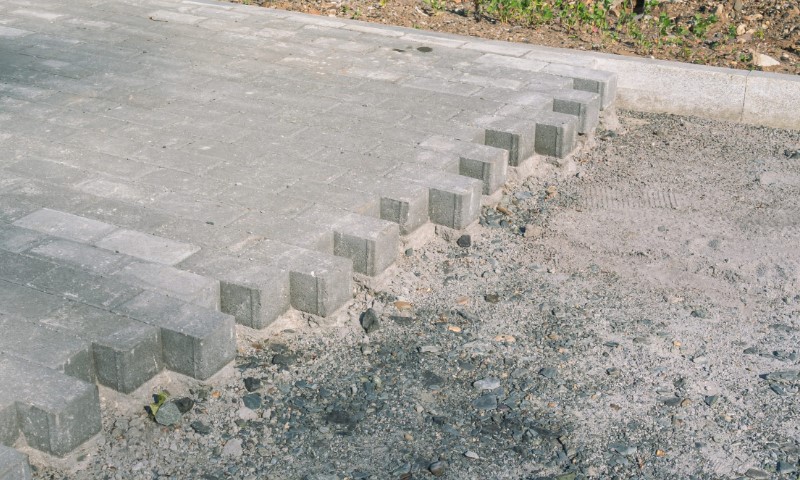
Repaving costs depend on the condition of the existing surface and its foundation.
For asphalt, a new overlay generally costs $3 to $7 per square foot, while full removal and replacement typically costs $8 to $15 per square foot.
An overlay can make financial sense when the driveway has surface wear but retains a stable base.
Deep potholes, substantial settlement, widespread cracking, or recurring drainage problems may require complete reconstruction.
A contractor should assess the pavement and underlying base before recommending resurfacing. Covering structural problems with another asphalt layer rarely provides a lasting repair.
Permit requirements depend on the municipality, property zoning, driveway location, and proposed construction.
Repaving an existing driveway without changing its dimensions may involve fewer requirements than creating a new driveway, expanding a parking area, or modifying a curb cut.
For example, Portland’s driveway regulations require permits for driveway installation or changes, with different requirements for private property and public rights-of-way.
Some municipalities also require a site plan showing the proposed driveway’s dimensions, boundaries, structures, and connection to the street. Seattle provides site plan templates for its transportation permit applications.
If your project requires drawings, our driveway permit site plans can help illustrate the proposed layout.
Our plans are non-certified and do not replace a licensed boundary survey or engineered drawings when your local authority requires them.
Homeowners in managed communities should also check HOA approval requirements before beginning work.
Keeping the design practical and addressing site conditions early can help control expenses.
Accurate dimensions also help prevent unexpected expenses.
A non-certified site plan can document the driveway’s proposed position, shape, and dimensions when preparing project plans or suitable permit submissions.
Gravel is generally the cheapest option. Basic surfacing can cost $1 to $3 per square foot on a suitable existing base, while more complete installations commonly cost $4 to $10.
Usually, yes. Asphalt commonly costs $7 to $13 per square foot, compared with $8 to $18 for concrete. Concrete may require less routine maintenance over its service life.
A straightforward installation may take one to three working days. Extensive preparation can add time, and concrete requires a longer curing period before normal vehicle use.
Asphalt commonly requires about 48 to 72 hours before vehicle use, depending on conditions and contractor instructions. Concrete generally requires at least seven days before ordinary passenger vehicles are allowed.
A well-maintained driveway can improve curb appeal and make parking more convenient. Any increase in resale value depends on local market conditions, the property’s overall condition, and the cost of the improvement.


Landscaping costs an average of $3,517 in 2026, with most homeowners spending between $1,248 and $6,068, according to Angi’s latest landscaping cost data. A complete new landscape installation typically costs
A plot plan is a scaled drawing of a property showing its boundaries, existing buildings, proposed improvements, and distances between important features. Homeowners use plot plans for building permits, zoning
Residential development is the process of planning, designing, and constructing housing on land intended for residential use. Projects range from individual homes and townhouse communities to apartment buildings and entire
