Every year, thousands of property owners face costly delays or outright rejections because their subdivision plan requirements weren’t met. From drainage miscalculations to missing zoning data, one overlooked detail can set your entire project back months.
It’s because a subdivision plan isn’t just a drawing – it’s a legal and technical roadmap that must comply with strict municipal regulations.
Here’s exactly what’s required to prepare a compliant, approval-ready plan that passes review the first time.
A subdivision plan must meet all zoning, infrastructure, and environmental standards to qualify for approval.
Incomplete or inaccurate surveys, drainage data, or documentation can delay or block approval.
GetASitePlan helps property owners design and submit approval-ready subdivision plans with confidence.
What Are the Requirements for a Subdivision Plan?
Requirements for making subdivision plan
Requirements for a subdivision plan (sometimes called a subdivision site plan in certain jurisdictions) vary by jurisdiction but typically include: survey, zoning, drainage, utilities, and environmental documentation.
Even though every city or county has its own standards, the goal is the same: ensure each parcel is legal, buildable, and fully serviced.
Municipal staff review plan requirements, engineers and planners design and evaluate layouts, and surveyors delineate lot boundaries. Once the plan satisfies zoning, drainage, and infrastructure regulations, the local authority approves the final plat for recording.
Core Components of a Subdivision Plan
A well-prepared plan includes technical, environmental, and legal documentation.
In the table below there are the key components every applicant should expect to provide for subdivision plan.
Component
What It Must Show / Include
1.
Boundary & Survey Data
A licensed surveyor maps the property boundary, existing features, and easements with full geographic accuracy.
2.
Zoning & Land-Use Compliance
Each lot must meet zoning density, frontage, and setback requirements to remain buildable.
3.
Lot & Road Layout
The plan illustrates the proposed road network, access points, and intersections for safe traffic flow.
4.
Drainage & Grading Plan
Engineers design drainage systems and grade elevations to prevent flooding and ensure proper water flow.
5.
Infrastructure & Utilities
The layout identifies utilities like water, sewer, and stormwater systems, plus proposed infrastructure connections
6.
Environmental & Legal Documentation
Environmental assessments, ownership verification, and permit applications prove legal and ecological compliance.
7.
Final Plat Submission
The developer submits the engineered plat for municipal review and official recording after all approvals.
Table 1: Subdivision plan core components
Once all these elements are organized into a cohesive drawing set, the next step is refining the design for submission – beginning with the preliminary and final plan stages.
Preliminary vs Final Subdivision Plan Requirements
Requirements for preliminary and final subdivision
Subdivision design always happens in two stages – preliminary and final.
Preliminary Plan: Conceptual drawings showing lot layout, access, and zoning fit. Used for early staff feedback.
Final Plan: A detailed, regulatory-compliant, engineer-sealed plan containing every technical, legal, and environmental detail required for official approval.
Moreover, the preliminary version identifies geographic and zoning feasibility, while the final plan includes all documentation needed to obtain permits and record the plat (if you’re preparing the layout or early drawings for your subdivision, check out our detailed guide on Subdivision Plan Design).
With both versions prepared, your plan moves into the formal approval process, where local authorities examine every detail for accuracy and compliance.
Subdivision Plan Approval Requirements
Subdivision plan approval process and required documentation
Before any subdivision can move forward, local authorities review, inspect, and evaluate each submitted plan to ensure full compliance.
What reviewers look for in subdivision plan:
Accurate survey and boundary delineation
Proper zoning and land-use compliance
Sufficient drainage and grading solutions
Functional infrastructure and utilities layout
Completed environmental and legal documentation
Proper seals, signatures, and file formats
In brief, the approval process typically follows this flow:
Developer submits subdivision plan → Municipality reviews plan requirements → Local authority approves the final plat once all conditions are satisfied.
Additionally, revisions may be required if documentation is incomplete or if technical details fail to meet municipal standards. For a step-by-step guide to the process, see our article Land subdivision.
Approved Subdivision Plan Requirements and Documentation
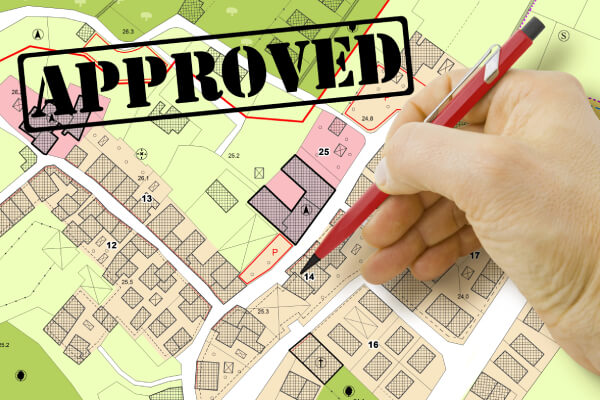
Final subdivision plan with all required documentation approved by the local authority
Once approved, a subdivision plan becomes an enforceable legal record that dictates how development proceeds.
After approval of subdivision plan:
The plat is recorded in the public registry.
Construction of roads, drainage, and utilities can begin under proper permits.
Any changes must be filed, reviewed, and re-approved.
Field inspections confirm that the built layout matches the approved drawings.
An approved plan is both a permit foundation and a compliance guarantee – essential for safe, lawful land development.
Example of a Typical Subdivision Plan Checklist
Every jurisdiction publishes its own list of requirements for subdivision plan approval.
A general subdivision plan requirementschecklist includes:
Completed application form and review fee
Proof of ownership or property deed
Licensed boundary survey and topographic map
Proposed lot and road layout
Detailed grading and drainage plans
Infrastructure and utilities design drawings
Environmental or soil assessment report
Zoning compliance statement
Engineer and surveyor seals and certifications
Digital file submissions (PDF, CAD, or GIS)
Public hearing or neighbor notification evidence
After your plan is approved and recorded, ongoing coordination between professionals ensures the project remains compliant through construction and final inspection.
Why Hiring Professionals Ensures Compliance
Experienced engineers reviewing subdivision plan to meet local requirements
Subdivision planning requires a combination of engineering precision, legal accuracy, and regulatory understanding. Errors can lead to project shutdowns, rejected permits, or even lawsuits.
Working with experienced professionals ensures your plan is compliant, technically sound, and ready for municipal review without costly rework.
Subdivision Design by GetASitePlan – Ready for Plan Approval
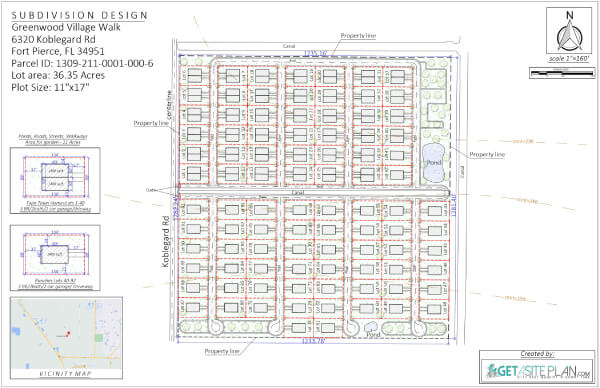
Obtain a subdivision design for proper subdivision plan
At GetASitePlan, we prepare accurate subdivision designs that follow the same layout and zoning standards required in official subdivision plans.
Our drawings include proposed lot divisions, roads, drainage, and infrastructure layouts – perfect for visualizing your project or submitting preliminary concepts to local authorities.
Get a detailed, regulation-ready design that helps you plan ahead, consult with professionals, and move smoothly toward subdivision approval.
Moving From Design to Approval With Confidence
Smooth transition from subdivision design to full project approval
Creating a subdivision plan that meets all technical and legal requirements is more than just a paperwork exercise – it’s the foundation for a successful development. When each detail is accurate, approvals come faster, and construction can start without setbacks.
With GetASitePlan, you get subdivision designs that align with municipal standards, minimize revision risks, and streamline your path to approval. Our professionally prepared layouts help property owners move from concept to construction with confidence and compliance.
Learn more about our contributor:
Jennifer Booker
Contributing Writer | Architecture & Design Writer
During my career, I’ve written articles on interior design, home remodeling, and renovation with an emphasis on money-saving tips and DIY ideas. It’s been a rewarding journey and I am thrilled to continue helping others bring their architectural visions to life.
Ten practical site plan examples cover most homeowner needs: existing property, additions, ADUs, decks, pools, fences, detached structures, driveways, grading, and septic systems. Together, they show how proposed work fits
The lowest-cost container home plan usually uses one 20- or 40-foot unit, retains most sidewalls, and places the kitchen and bathroom on one utility wall. Moderate budgets can support two
A load-bearing wall carries weight from a floor, roof, or wall above and transfers that weight through the structure to the foundation. The strongest clues are joists ending over the