Removing an old swimming pool can free up valuable backyard space, eliminate maintenance expenses, and make room for new landscaping or outdoor structures. However, demolition costs depend heavily on the type of pool and how much of it needs to be removed.
The average pool removal cost in 2026 is approximately $6,000, with most homeowners paying between $5,000 and $8,000. Partial in-ground pool removal typically costs $2,500 to $10,000, while complete removal ranges from $4,000 to $16,000, according to Angi’s 2026 pool removal estimates.
At Get a Site Plan, we prepare non-certified site plans for demolition permits and property improvements. From our drafting work, we know that documenting the existing pool, nearby structures, and proposed changes is an important part of preparing a permit application.
The biggest price difference comes from removing an above-ground pool versus demolishing an in-ground structure.
Pool Removal Type
Average Cost in 2026
Basic above-ground pool removal
300-800
Larger above-ground pool removal
800-3,000
Partial in-ground pool removal
2,500-10,000
Complete in-ground pool removal
4,000-16,000
Estimated U.S. costs based on 2026 removal data from Angi and HomeGuide. Actual contractor quotes vary by location and project scope.
Removing a small above-ground pool is relatively straightforward because it generally involves dismantling the frame, removing the liner, and clearing the equipment.
In-ground pools require excavation, demolition, debris disposal, and backfilling. The amount of concrete or fiberglass being removed significantly affects the final price.
Full vs. Partial Pool Removal: Which Costs Less?
Homeowners generally have two options when removing an in-ground swimming pool. Both eliminate the usable pool, but the work involved and future land-use restrictions differ.
Full Pool Removal: $4,000 to $16,000
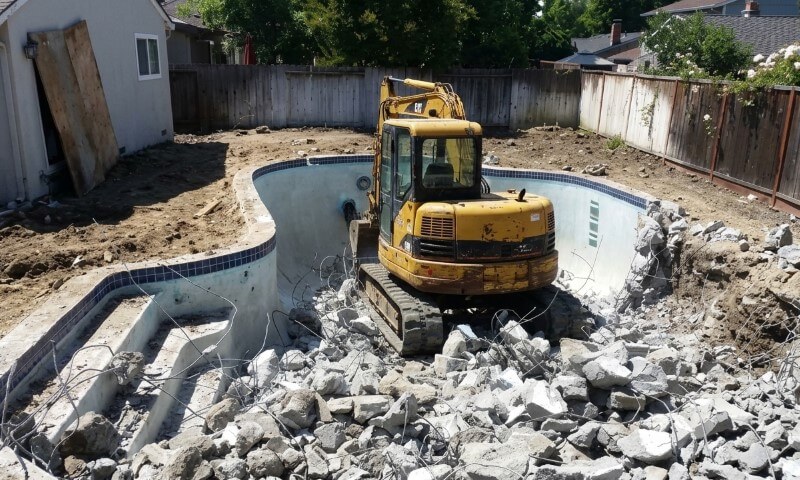
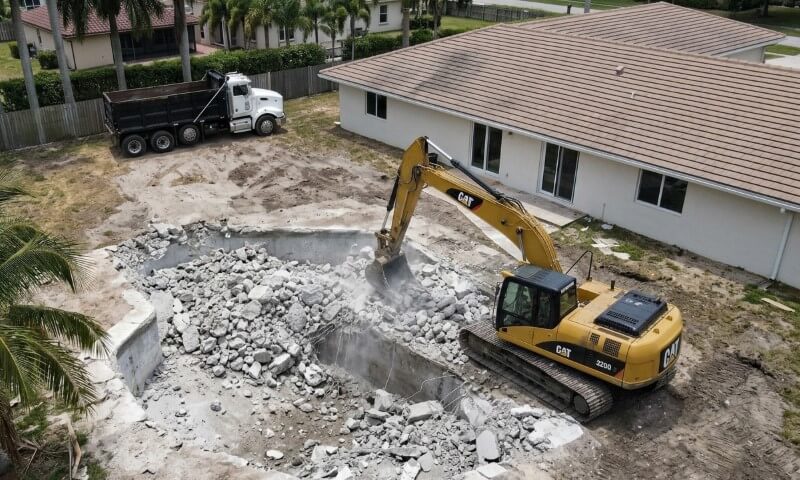
Full removal involves demolishing and removing the entire pool shell, including concrete walls, flooring, plumbing, and other components.
The excavation is then backfilled with suitable material and compacted according to local requirements.
Full removal is generally the better option when homeowners intend to construct a garage, home addition, or another permanent structure in the former pool area. Future construction still requires appropriate soil verification, engineering, and permits.
Partial Pool Removal: $2,500 to $10,000
Partial demolition involves removing the upper portions of the pool and creating drainage openings before filling the remaining structure with approved material.
It requires less excavation and debris hauling.
However, partial removal can restrict future construction. For example, the City of Torrance’s demolition requirements prohibit construction over or within five feet of a pool abandoned in place unless additional approved work is completed.
For a more detailed explanation of these methods, see our pool removal guide.
Pool size and demolition method determine much of the expense, but several additional factors influence contractor estimates.
Pool material: Concrete and gunite require substantial demolition work. Fiberglass shells may need to be lifted or cut into sections, while vinyl-lined pools involve removing liners and supporting components.
Size and depth: Larger, deeper pools produce more debris and require additional backfill.
Equipment access: Narrow gates, steep slopes, and nearby buildings can limit excavator access and increase labor costs.
Debris disposal: Heavy concrete, steel reinforcement, and other materials increase hauling and disposal expenses.
Local labor rates: Demolition costs vary between regions, particularly where labor and disposal charges are higher.
We recommend asking contractors to identify these factors separately when preparing estimates. It makes competing bids easier to compare.
Additional Pool Demolition Expenses
The initial contractor quote should clarify whether it covers draining, demolition, backfilling, permits, inspections, and final site restoration.
Common additional expenses include:
Expense
Estimated Cost
Pool draining
Up to $175
Demolition permits and inspections
Around $200, varies locally
Concrete deck removal
2-5 per sq. ft.
Debris disposal
150-500
Soil compaction testing
250-1,000
Pool fence or enclosure removal
800-2,000
Illustrative 2026 cost estimates from Angi. Some expenses may already be included in a contractor’s complete removal price.
Landscaping is another consideration. Installing sod, replacing damaged walkways, or constructing a new patio adds to the overall budget.
The choice of backfill also matters. Soil intended to support future construction requires different preparation and testing from material approved solely for landscaping.
Do You Need a Permit to Remove a Swimming Pool?
Many municipalities require a demolition or grading permit before pool removal begins. Requirements depend on the location, removal method, and intended use of the property.
For example, the City of Mountain View, California, requires a permit for swimming pool demolition or abandonment and lists a $200 fee, including inspection. Applicants must submit plans showing the pool’s dimensions, location, surrounding structures, and proposed fill material.
When Is a Site Plan Required?
A site plan helps the building department identify the demolition area and its relationship to surrounding structures.
Depending on local requirements, it can show:
Property lines and existing buildings
Pool dimensions and location
Distances from the pool to nearby structures
Existing access routes and relevant utilities
Proposed changes to the property
At Get a Site Plan, we prepare demolition permit site plans using available property records, satellite imagery, and homeowner-provided information.
Our drawings are non-certified. Where the authority requires a licensed surveyor, engineer, or certified grading plan, additional professional documentation is necessary.
Homeowners can also review our site plan examples to see how existing and proposed property features are represented.
How Long Does Pool Removal Take?
Removing an in-ground swimming pool typically takes one to seven days of on-site work, depending on its size, demolition method, and access conditions. Permitting and inspections can extend the overall project schedule.
The usual process involves draining the pool, disconnecting utilities, demolishing the structure, removing debris, placing approved backfill, and completing inspections.
Water disposal also requires attention. Fore example, the City of Portland’s pool drainage guidance explains why chemically treated pool water must be managed carefully to prevent stormwater pollution. Local discharge rules should be checked before draining begins.
How to Reduce Pool Removal Costs
The most effective savings come from planning the demolition scope before hiring a contractor.
Obtain at least three itemized demolition estimates.
Confirm whether permits and disposal fees are included.
Remove movable backyard obstacles before equipment arrives.
Choose partial removal only when local rules and future property plans allow it.
Coordinate demolition with any planned landscaping or yard renovation.
Avoid choosing cheaper backfill or skipping required soil testing. Poor compaction can create expensive drainage and settlement problems later.
FAQs
Partial removal and filling generally cost less because much of the pool structure remains underground. Full removal involves more demolition, hauling, and backfilling.
Potentially, after full removal and properly engineered backfilling. The building department must approve the proposed construction and any required soil documentation.
It depends on the local real estate market. Removing an aging pool with substantial maintenance expenses can appeal to buyers, while eliminating a desirable pool could reduce a property’s value.
Some smaller above-ground pools can be dismantled by homeowners. Electrical disconnections, safe water disposal, and local requirements still need to be addressed.
Yes. After appropriate backfilling, grading, and preparation of the topsoil, the area can be seeded or covered with sod.
Yes. Improper drainage openings, unsuitable fill material, and inadequate soil compaction can cause settlement or water accumulation.
Plan Your Pool Removal Before Demolition
Pool removal costs in 2026 typically range from a few hundred dollars for basic above-ground dismantling to more than $16,000 for complicated in-ground demolition.
Before choosing a contractor, confirm your local building permit requirements and decide how you intend to use the reclaimed space.
If your municipality requests a property drawing, we can prepare a non-certified site plan documenting the existing pool and proposed changes for your permit application.
Our Design & Drafting Team consists of experienced CAD designers specializing in site plans, floor plans, elevations, and property drawings for residential and commercial projects.
Our content is based on hands-on drafting experience and the real-world questions we encounter while helping property owners, contractors, and professionals prepare drawings for permits, HOA submissions, and project planning.
Residential development is the process of planning, designing, and constructing housing on land intended for residential use. Projects range from individual homes and townhouse communities to apartment buildings and entire
The average cost to pave a driveway in 2026 is approximately $4,900, with most homeowners spending between $2,500 and $7,300. Asphalt paving typically costs $7 to $13 per square foot,
Adding a dormer to your roof typically costs $6,000 to $25,000 in 2026, with a national average of approximately $15,000. Larger dormers, complicated roof modifications, and projects involving finished living