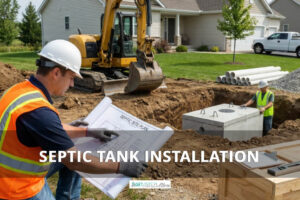
Septic Tank Installation: A Complete Step-by-Step Guide
Whether you’re building on a rural lot or replacing a failing system, septic tank installation is one of the most regulated, and most consequential projects a homeowner can take on.




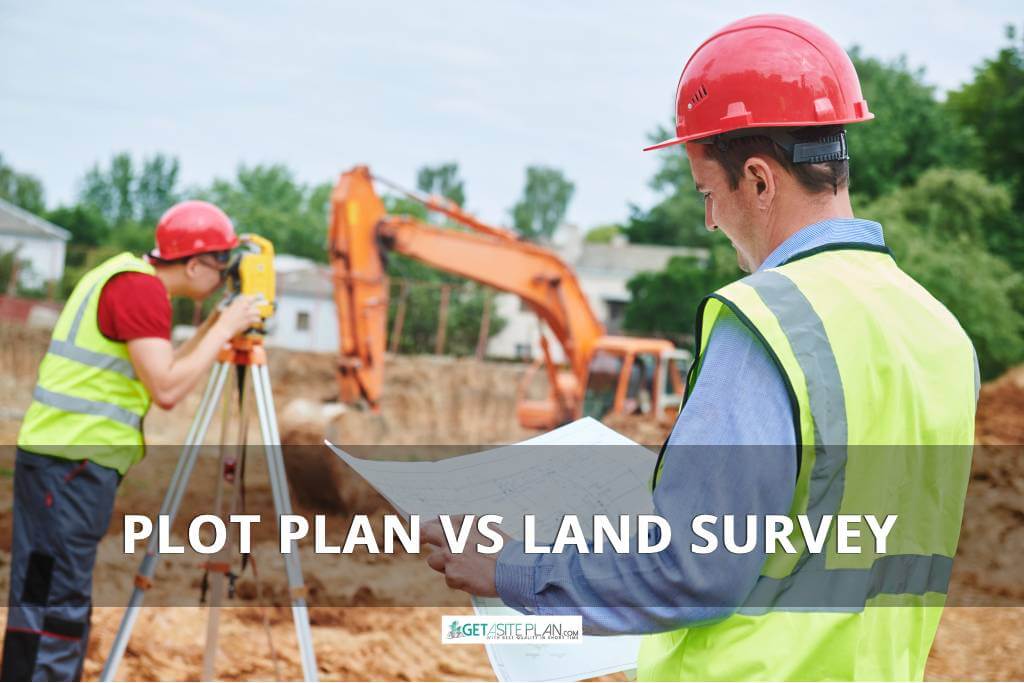

Plot plans and land surveys are invaluable for land ownership or development. They provide detailed insights into a property’s structure and layout.
Although these terms are often used interchangeably, they represent distinct methods and serve different purposes.
This article covers everything you need to know about plot plans vs. land surveys, including their level of detail, purpose, requirements, and costs, to help you make an informed decision.
Read on to understand their differences (and similarities).


A plot plan differs from a land survey because it focuses on property-related layout and structures, while a land survey defines exact boundaries and topographic details.
A survey measures land boundaries, and the surveyor records precise property lines to create a legal document that maps a specific land area.
A land survey is used to establish and outline property boundaries, identify easements, and analyze terrain, often including topographic details (contour maps) and other technical and cadastral information critical for regulatory compliance and construction planning.
In contrast, a plot plan is a scaled, two-dimensional drawing similar to a site plan. It depicts the layout of existing structures and proposed building structures and contains key site features such as driveways, landscaping elements, and proposed changes.
(If you’re interested in differences between plans, you can also read our article “Site Plan vs Survey“).
While it is not a boundary-specific legal document, a plot plan represents the proposed layouts for construction and plays a vital role in building design and planning.
Additionally, plot plans may require prior land surveys, especially for projects that demand precise property boundary information to comply with local regulations.
Here’s a table showing all the differences between the land survey and the plot plan in brief.
| Aspect | Land Survey | Plot Plan |
| Purpose | Defines legal boundaries, resolves disputes, and ensures accurate property records. | Visualizes property layout for design, development, and permitting purposes. |
| Certification | Certified by a licensed surveyor; legally recognized. | Not certified; often created by designers or homeowners. |
| Legal Status | Legally binding and required for transactions or disputes. | Not legally binding; used for planning and compliance. |
| Content | Includes boundaries, easements, encroachments, and topographic details. | Includes property features like structures, setbacks, and utilities. |
| Accuracy | Extremely precise; based on field measurements and survey data. | Accurate for planning but less precise than a survey. |
| When to use | Use for legal matters like disputes, transactions, or title insurance. | Use for obtaining permits, planning construction, or visualizing layouts. |
Table 1: Differences between the plot plan and the site plan
Let’s see those differences more thoroughly.
Differences between the two are most evident in content, level of detail, and legal implications.
Even though they both represent a proper visual representation, compared to plot plans, land surveys provide a higher level of detail and precision.
Land surveys require hiring surveyors who use specialized tools and techniques to measure relevant information, whereas plot plans have a simpler level of detail that may not satisfy legal requirements.
Land surveys are official documents created by qualified surveyors to meet specific regulations and standards, granting them full legal recognition.
In contrast, plot plans, while adhering to certain standards and regulations, are not classified as official documents and lack the same legal authority as land surveys.
Now, let’s highlight their similarities and explore why these terms are often confused.
A plot plan and survey are both useful in drafting a property.
Providing a broader picture of where the property is located, where the boundaries are, and what the property includes, they provide valuable information to assist property decisions.
Both approaches also address zoning and development requirements. For instance, zoning affects plot plan development, while plot plans account for zoning, structures, and topography to ensure compliance with local regulations.
Therefore, they are both helpful in providing information about the property, yet the situations in which they are helpful are different.

Which one to choose, whether a plot plan or a land survey, depends on your project needs.
Here’s what projects require a plot plan and which ones require a land survey.
If you plan to work on a property and need information on the dimensions and shape of it, including the location and dimensions of the structures within the property boundaries, a plot plan can be helpful.
Typically, it’s used in the following situations:
In these contexts, plot plans focus on design and construction aspects rather than legal boundary determination.
Land surveys provide precise legal measurements of land and establish legal boundaries for property ownership and development.
Therefore, they are important in many situations regarding property, both personal and business.
These situations include the following:
Additionally, the survey establishes legal boundaries while also identifying easements and improvements, such as underground utilities or access rights, that may affect construction plans.
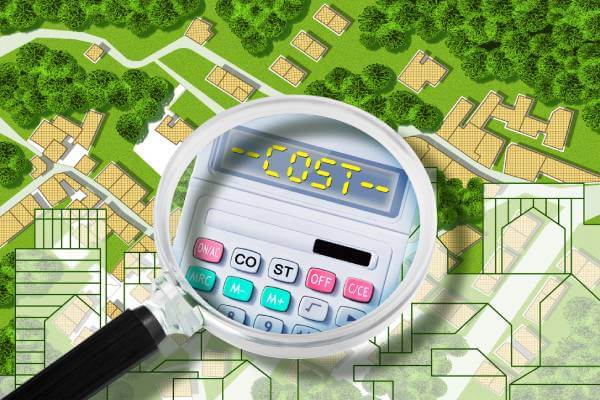
Land surveys are generally more expensive, with costs ranging from $500 to $3,000, while plot plans are more affordable, typically priced between $100 and $500.
The higher cost of a land survey reflects the need for fieldwork, precise measurements, and certification by a licensed surveyor. Plot plans, on the other hand, are less detailed and don’t require certification, which makes them a more budget-friendly option.
Yet, first make sure this is possible in your city, as in some areas, such as the City of Boston, a plot plan is defined as a stamped drawing created to a measurable scale by a state-registered engineer or land surveyor [1].
Nevertheless, while you can create a plot plan yourself, either by hand or using specialized software, it may take time to learn the required techniques.
However, some features may seem complex for plot plan design. So if you’re not familiar with how to draw a site plan or consider complex terrain, maybe it’s better to leave it to someone with experience.
For reasons like that, using an online drawing service like GetASitePlan can simplify the process and ensure a professional result within a 24-hour timeframe, helping you obtain site plans for permits and kick-start your project without delays.


Land surveys and plot plans have their pros and cons, and an overview could help you choose the most suitable option if both are taken into consideration.
The pros of land surveys are that they provide a lot of information (like zoning information, topographical information, boundary information, and much more) and can give you more options for the information you get.
The main drawbacks are price and the inability to DIY.
On the other hand, plot plans are cheaper and offer more concise information, which can sometimes be a drawback as they often don’t provide all the information you need. Additionally, plot plans, like site plans, are easier to obtain as there are several accessible options.
You can see the pros and cons summarized in the table below.
| Type | Land Survey | Plot Plan |
| Pros | Comprehensive information, Multiple Choice | Budget-friendly, Useful for building projects |
| Cons | Expensive, Requires a pro | Limited details |
Table 2: Land survey vs plot plan: pros and cons

Choosing between a plot plan and a land survey comes down to understanding your project’s requirements.
While a land survey is necessary for legal matters and disputes, a plot plan suffices for design and permitting purposes. Carefully weigh your needs, budget, and project scope to avoid unnecessary expenses.
For many projects, a professionally prepared plot plan offers the accuracy and clarity needed without the higher cost of a survey.
References:

Whether you’re building on a rural lot or replacing a failing system, septic tank installation is one of the most regulated, and most consequential projects a homeowner can take on.
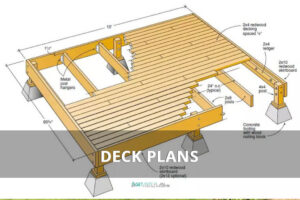
Ever tried explaining your dream deck without a drawing? Suddenly everyone’s imagining a different patio. That’s where a deck plan saves the day – the visual roadmap that turns “I

A landscape rendering gives you a 3D preview of your garden or yard – a chance to see every angle before any work begins. And it has gone digital. What
