What Is a Site Plan: Definition, Elements and Examples
Planning a home addition, building a garage, or installing a swimming pool usually involves more than deciding where the new structure should go. You also need to show how the





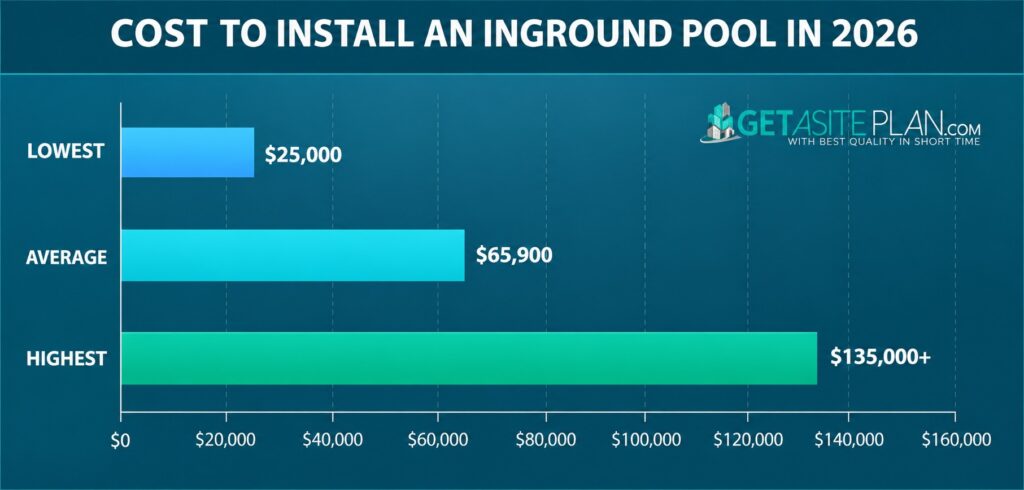
An inground pool costs about $44,500 to $87,500 in 2026, with a national average close to $65,900. Smaller vinyl pools can come in below that range, and large custom concrete pools can easily cost $100,000 to $150,000 or more.
According to Angi’s 2026 cost data, homeowners currently spend an average of $65,909 on inground pool installation. The same data puts the normal range at $44,499 to $87,349.
The final bill depends heavily on the pool material, dimensions, excavation conditions, local labor rates, decking, fencing, equipment and permit requirements. A contractor’s initial pool quote also may not include everything needed to turn the excavated pool into a finished backyard.
For early budgeting, we would use $45,000 to $90,000 as a realistic starting range for a standard residential inground pool.
Higher-end projects move beyond that quickly.
| Project level | Approximate 2026 cost |
|---|---|
| Small/basic inground pool | $25,000–$45,000 |
| Typical residential pool | $45,000–$90,000 |
| Large or upgraded pool | $90,000–$135,000 |
| Custom luxury pool | $135,000+ |
Treat these figures as planning estimates rather than fixed prices. Site conditions alone can move a project by thousands of dollars.
A narrow backyard with poor equipment access, for example, can require more labor than an open lot where an excavator can drive directly to the pool location. Rock, slopes, retaining walls, and utility relocation create the same problem.
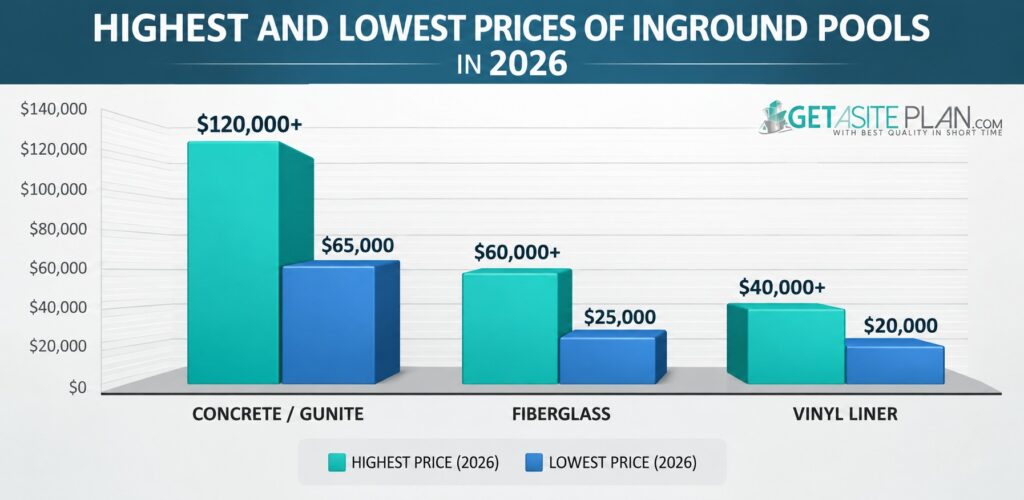
Vinyl, fiberglass, and concrete remain the three main options for residential inground pools.
Current pool construction estimates put vinyl at the lower end and concrete at the upper end.
| Pool material | Typical cost range |
|---|---|
| Vinyl liner | $20,000–$40,000+ |
| Fiberglass | $25,000–$60,000+ |
| Concrete/gunite | $65,000–$120,000+ |

Those numbers are most useful for comparing construction methods. A complete backyard project can cost considerably more after adding excavation complications, decking, fences, landscaping, and equipment.

Vinyl is usually the least expensive way to build a full-size inground pool.
The shell is relatively flexible, and there are more shape options than with a prefabricated fiberglass pool.
The tradeoff is the liner itself. It will eventually need replacement, so a lower construction price does not mean the lowest lifetime cost.
Vinyl makes the most sense when upfront budget matters more than minimizing future replacement work.


Fiberglass pools usually sit between vinyl and concrete in price.
The shell arrives prefabricated and is lowered into the excavated area. Installation can therefore be faster than construction of a concrete pool.
The main limitation is design flexibility. Shell dimensions, shapes, steps and seating are determined by available manufactured models. Large shells can also create delivery and crane-access problems on restricted sites.

Concrete is normally the most expensive option, especially once the design becomes customized.
Its main advantage is flexibility. A concrete pool can be shaped around unusual lots, built to greater depths, and designed with features that are difficult to achieve with a prefabricated shell.
That flexibility comes with additional labor and finishing work. For a large custom pool with premium decking, water features, or an attached spa, a six-figure budget is no longer unusual.
More pool means more excavation, structural material, interior finish, water, plumbing, and deck perimeter.
A 12-by-24-foot family pool therefore should not be budgeted like a 16-by-32-foot pool simply because both use the same construction method.
Published estimates vary because some pricing includes only the basic installation and others include more of the finished project. One current cost guide places a standard 12-by-24-foot inground pool between roughly $38,000 and $100,000, depending on material and specifications, according to This Old House estimates.

Going smaller can save money in several places at once. Excavation becomes easier, the pump can be smaller, less decking is required, and long-term chemical and heating requirements fall.
For homeowners primarily interested in cooling off rather than swimming laps, a plunge or cocktail pool can therefore make more financial sense than a conventional family-size pool.
Pool material and size receive most of the attention, yet the property itself can be just as important.
A straightforward excavation on relatively level soil is one thing. A hillside lot, rocky soil or backyard that can only be reached through a narrow side yard is another.
Current national estimates put average excavation around $3,400, with difficult projects potentially reaching much higher amounts.
Before finalizing a pool location, look at access for excavation equipment as well as the finished design.
Rectangular pools and common prefabricated shapes are generally easier to price and construct.
Freeform pools, deep ends, beach entries, tanning ledges and complex transitions require more labor and material.
Going deeper also means removing more soil and building more pool structure. If nobody in the household needs a deep diving area, reducing depth is one of the simpler ways to control cost.
A sloping backyard can turn a relatively ordinary pool installation into a substantial grading project.
The builder may need retaining walls, additional drainage or structural work before the pool itself can be installed. Those items belong in the project budget from the start rather than being treated as minor extras later.
A detailed plot plan can help show how the proposed pool relates to the house, lot boundaries, setbacks, and other existing features.
The shell is only part of the finished project.

Typical additional costs can include:
| Item | Approximate cost |
|---|---|
| Pool permit | $450–$1,800 |
| Excavation | Around $3,400 |
| Heater | $1,800–$4,000+ |
| Filtration equipment | $500–$3,000 |
| Decking | $500–$20,000+ |
| Fence/enclosure | $1,500–$10,000 |
| Pool cover | $800–$2,600 |
| Landscaping | $3,000–$5,000+ |
| Water features | $450–$1,900+ |
These 2026 ranges come from national project-cost data and should be checked against local contractor pricing.
Safety barriers deserve particular attention. The U.S. Consumer Product Safety Commission publishes home pool barrier guidance intended to reduce the risk of children accessing pools without supervision. Local building codes determine the actual requirements for your property.

Construction is the largest expense, not the last one.
Routine pool ownership includes chemicals, cleaning, electricity, filters, equipment maintenance, and periodic repairs. Heating and professional service add more.
A reasonable budget for routine maintenance is roughly $90 to $270 per month, although climate, pool size, and how much work you perform yourself make a substantial difference.
Vinyl owners also need to plan for future liner replacement. Concrete pools generally require more surface maintenance over their lifetime. Fiberglass typically requires less structural surface work, assuming the shell remains in good condition.
When comparing two pool quotes, looking only at installation price can therefore give you the wrong answer. Consider what the pool will cost over the next 10 or 15 years.
In most jurisdictions, yes.
Local requirements vary, and pool construction can involve building, electrical, plumbing, zoning, and barrier requirements. Some properties also have septic, easement, drainage or environmental restrictions.
Montgomery County, Maryland, for example, requires a building permit for construction, alteration, or enlargement of a residential swimming pool and specifically requests a location diagram or site plan as part of the documentation. Its pool permit requirements also cover equipment and other construction information.
Your city or county is the authority that decides exactly what your project requires.
A site plan can show the proposed pool in relation to property lines, the house, accessory structures, easements, fences, and required setbacks.
We prepare swimming pool permit site plans online using available property information such as GIS data, satellite imagery, and parcel records. Depending on the package and project, the plan can include the proposed pool, equipment area, fence, and surrounding property features.
Our plans are non-certified and are not a substitute for a legal survey, architect, or engineer when your authority having jurisdiction requires one. We also do not issue permits or decide whether a proposed pool complies with local zoning rules.
Check the permitting office first. Once you know what it requires, you can choose the appropriate site plan package.
Homeowners in managed communities should also review their architectural rules. A city permit does not automatically equal HOA approval. If the association requires drawings, a separate HOA approval site plan may be part of the submission.

The easiest savings usually come from simplifying the project before construction begins.
Choose a smaller pool if you do not need swimming-lap dimensions. Keep the shape simple. Avoid an unnecessarily deep end. Limit the first phase to essential decking and equipment. Decorative features can be added later.
Getting several detailed contractor quotes is also important. Compare what each quote includes rather than comparing only the number at the bottom.
Pay particular attention to excavation, soil disposal, electrical work, fencing, decking, permit fees, grading, and final landscaping. One quote can look $10,000 cheaper simply because several of those items are missing.
Most importantly, settle the location early. Discovering after design or excavation that the pool conflicts with a setback, easement, septic area, or other restriction can erase any savings you found elsewhere.
Yes. A home equity loan provides a lump sum, while a HELOC lets you borrow as needed. Both use your home as collateral.
There can be. HELOCs may include application, appraisal, origination, title, annual and other fees.
It can. Pools increase liability exposure, so the Insurance Information Institute recommends reviewing your coverage with your insurer.
Potentially, if its main purpose is qualifying medical care. IRS rules generally reduce the eligible expense by any increase in the home’s value.
Possibly. Interest on qualifying home-equity debt used to substantially improve the home may be deductible, subject to IRS limits.
Yes. ENERGY STAR says certified inground pumps use about 20% less energy than standard models and can reduce annual electricity costs.
Yes. ENERGY STAR says covers can reduce chemical use by 35%–60%, conserve 30%–50% of water and lower heating costs.
Yes. The IRS lists swimming pools as improvements that can increase your home’s tax basis, so keep installation records.

Planning a home addition, building a garage, or installing a swimming pool usually involves more than deciding where the new structure should go. You also need to show how the
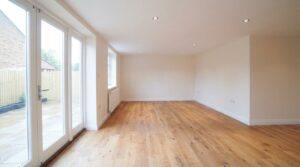
Adding a room to your house costs approximately $48,000 on average in 2026, with many homeowners spending between $20,900 and $72,600. Larger additions, bathrooms, and primary suites can cost considerably
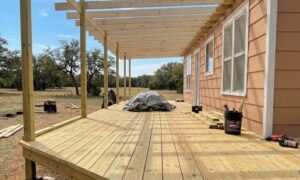
Building a new deck costs $8,321 on average in 2026, with most homeowners spending between $4,339 and $12,653. According to Angi’s 2026 deck cost data, those figures come from more
