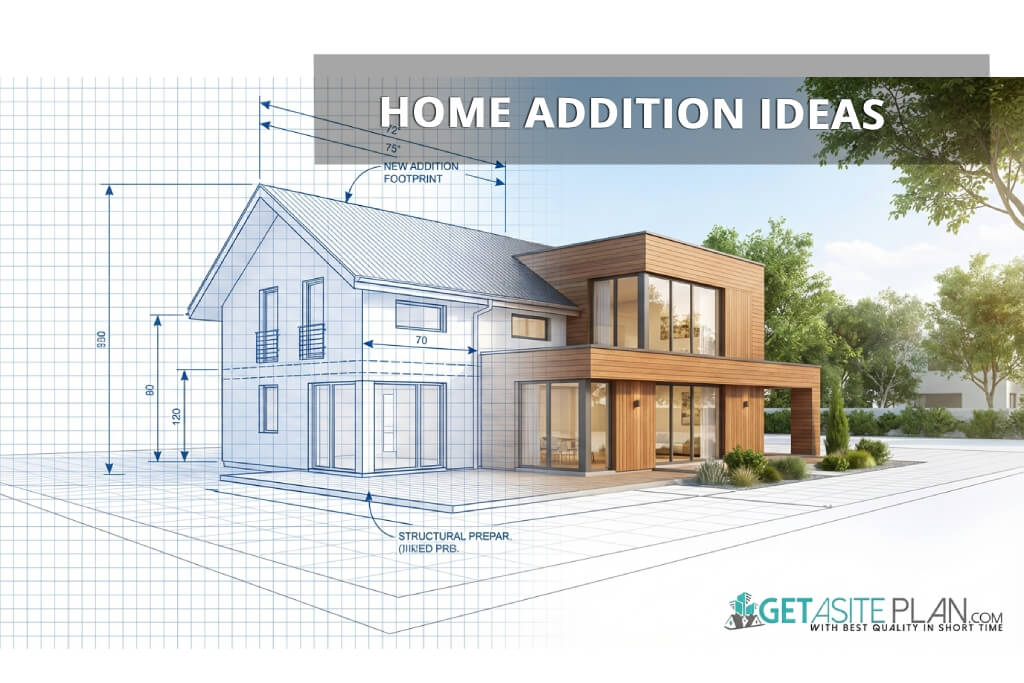
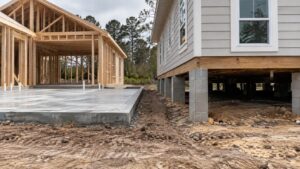
Adding square footage is one of the most reliable ways to improve comfort, functionality, and long-term property value.
Whether you’re considering a primary suite, a kitchen expansion, or building a second story, the right home addition can dramatically transform how your home works for your lifestyle. But not every idea is equally practical. Design choices, zoning rules, and permit requirements can influence what’s possible on your lot. In this guide, we’ll explore popular home addition ideas – and what it takes to move them from concept to approved construction.
Key Takeaways:
The most valuable home additions increase functional square footage while aligning with neighborhood standards and long-term resale potential.
Zoning rules, setback limits, and building permit requirements directly impact what type of addition can be approved on your property.
Preparing accurate plans and site documentation early, often with professional support from GetASitePlan, helps reduce approval delays and move projects from concept to construction.
Home Addition Before and After Examples and Ideas
Ideas for home additions
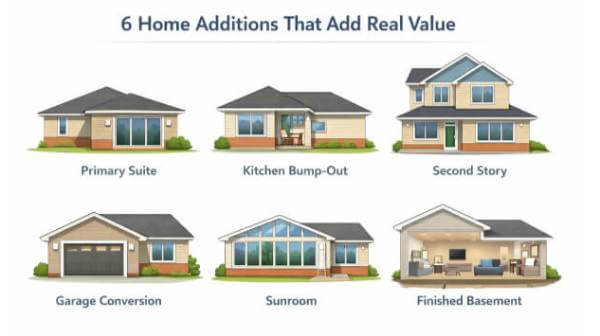
The most successful home additions solve real space limitations while improving long-term resale value. Some projects expand outward, others build upward, and some reconfigure existing areas to create entirely new living zones.
The key is choosing an addition that fits your lot, your budget, and your long-term goals while making sure it can realistically move from design to approved construction.
1. Primary Suite Additions
A primary suite addition is one of the most valuable ways to expand living space while improving privacy and comfort. Adding a larger bedroom with an ensuite bathroom and walk-in closet modernizes older floor plans and creates a dedicated retreat within the home.
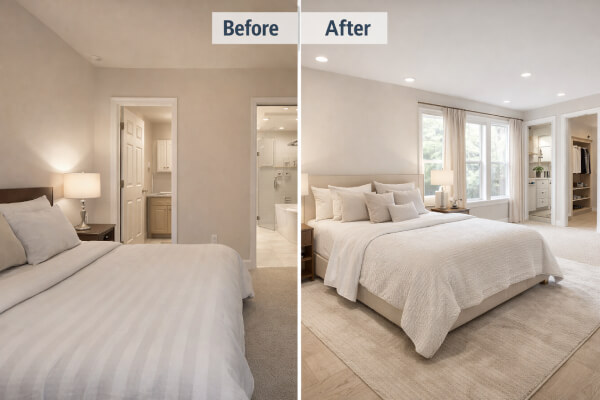
Primary suite additions before and after
Before: A standard bedroom sharing a hallway bath.
After: A private suite with dual vanities, upgraded shower or soaking tub, improved storage, and better natural light, significantly elevating perceived home value.
Estimated ROI:
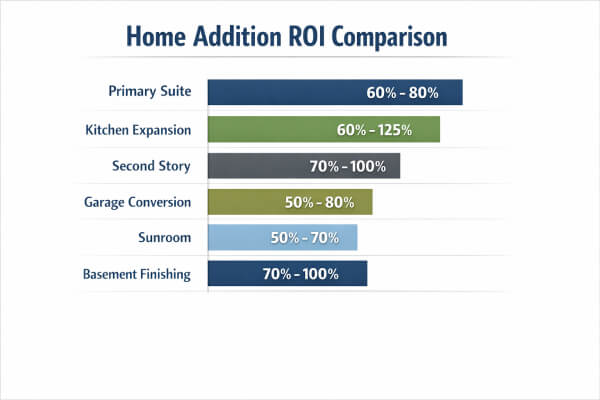
Primary suite additions typically recoup 60-80% of construction costs, depending on local market demand and finish level. For more detailed cost breakdowns of home additions, see our guide to Home Additions Cost.
Planning Note:Because most primary suites expand the home’s footprint, zoning setbacks and lot coverage limits must be reviewed early. Submitting accurate site plans documentation with the permit application helps reduce approval delays and redesign requests.
2. Kitchen Expansions and Bump-Outs
A rear extension or small bump-out can create room for an island, additional cabinetry, or a more open layout that connects to adjacent living spaces.
Before and After
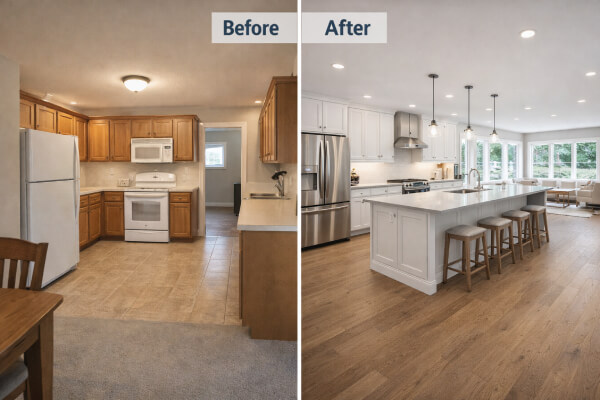
Before and after kitchen expansions and bump-outs
Before: Limited counter space and a closed layout.
After: Open sightlines, added natural light, and improved traffic flow – often with only 75–150 additional square feet.
Estimated ROI:
Kitchen expansions typically recoup 60-125% of their cost depending on market conditions and finish level. Learn more about cost factors and estimates for room expansions in Room Addition Cost.
Planning Note:
Because these projects expand the footprint, they usually require zoning review and a building permit. Verifying setback limits and preparing accurate site documentation early helps prevent redesigns during approval.
3. Second Story Additions
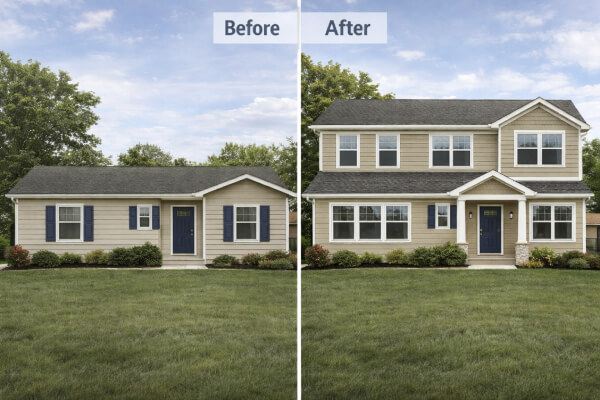
A second story addition is one of the most dramatic ways to increase square footage without expanding your home’s footprint. This option is especially appealing for properties with limited yard space or strict lot coverage limits. By building upward, homeowners can add multiple bedrooms, bathrooms, or even a full primary suite.
Before and After
Before and after differences in second story additions
Before: A single-story home with limited living space and tight room layouts.
After: A two-level home with expanded bedrooms, improved separation between living and sleeping areas, and significantly increased resale potential.
Estimated ROI:
Second story additions generally recoup 70-100% of their cost, particularly in high-demand neighborhoods where added square footage significantly increases property value. For a deeper look at typical pricing and factors for adding a second floor, see Cost to Add Second Story.
Planning Note:
Unlike horizontal additions, second story projects often require structural evaluation to confirm the existing foundation and framing can support the added weight.
Local height restrictions, zoning limits, and building permits must be reviewed carefully before finalizing design plans to avoid costly revisions during approval.
4. Garage Conversions and Room Over Garage
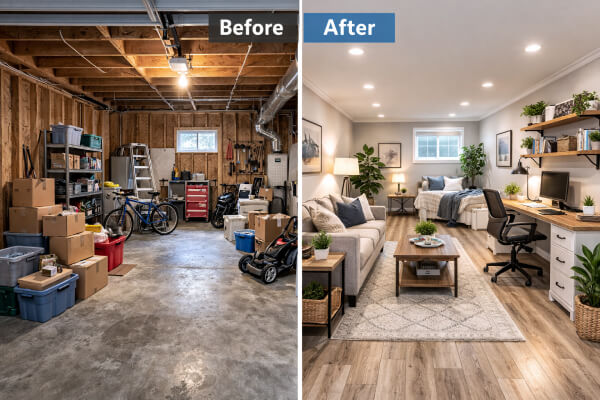
Converting an existing garage or building a room above it is a cost-effective way to add functional square footage. These projects are popular for creating home offices, guest suites, rental units, or bonus rooms without significantly altering the home’s footprint.
Before and After
Before and after garage and room over garage conversions
Before: An underutilized garage used primarily for storage.
After: A finished living area with insulation, proper lighting, HVAC integration, and upgraded flooring, transforming unused space into a high-value room.
Estimated ROI:
Garage conversions and room-over-garage additions typically recoup 50-80% of project costs, depending on whether the space is finished as a simple bonus room or a fully equipped accessory dwelling unit (ADU).
Planning Note:
Local regulations may require homeowners to maintain a minimum number of off-street parking spaces when converting a garage. Structural review, updated floor plans, and in some cases a revised site plan are often required during permit submission.
Visual tools such as scaled floor plans and 3D renderings can also help homeowners evaluate layout changes before final approval,reducing design revisions and keeping the project aligned with local requirements.
5. Sunrooms and Four-Season Rooms
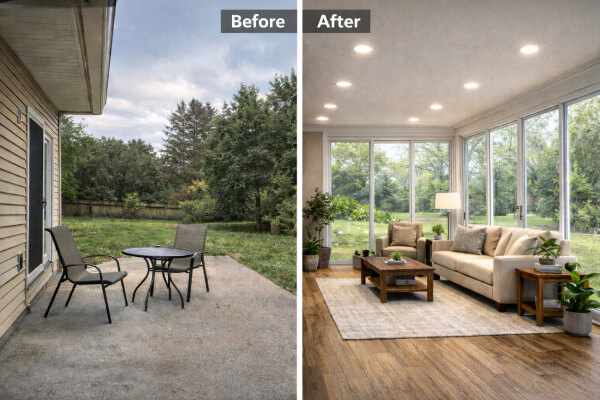
A sunroom or four-season room is a popular way to extend living space while increasing natural light and connection to the outdoors. These additions are typically built at the rear of the home and can serve as casual living areas, home offices, or dining spaces with panoramic views.
Before and After
Sunrooms and four-season rooms transformations
Before: An unused patio or underutilized backyard area.
After: A bright enclosed space with large windows, improved insulation, and extended year-round usability, creating a seamless indoor-outdoor feel.
Estimated ROI:
Sunrooms typically recoup 50-70% of their cost, though returns vary depending on climate and whether the space is fully insulated and climate-controlled.
Planning Note:
Heated four-season rooms are generally considered conditioned living space and may count toward total square footage, while three-season rooms often do not.
Even lightweight structures usually require building permits and must comply with setback requirements. Reviewing lot placement and preparing accurate site documentation early can help prevent delays during approval.
6. Basement Finishing
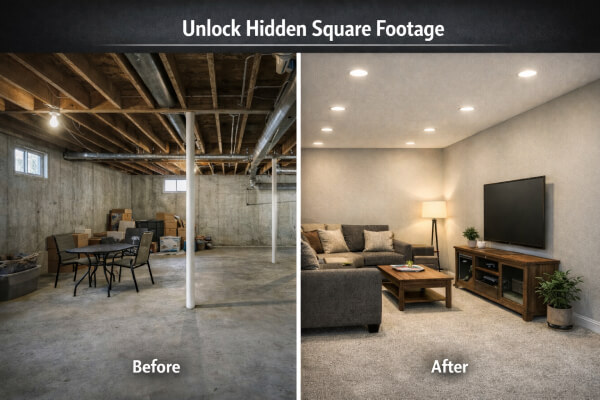
Finishing a basement is one of the most efficient ways to add usable living space without expanding outward or upward. Because the structure already exists, homeowners can transform unfinished square footage into a family room, guest suite, home gym, or even a rental-ready living area.
Before and After:
Basement transformation into living area
Before: An unfinished basement used primarily for storage.
After: A fully insulated and finished space with proper lighting, flooring, and defined living zones – dramatically increasing functional square footage.
Estimated ROI:
Basement finishing projects typically recoup 70–100% of their cost, particularly when they include a bathroom or flexible multi-use layout.
Planning Note:
Most municipalities require permits for basement finishing, especially when adding bedrooms or bathrooms. Egress windows are often mandatory for sleeping areas, and homes located in flood-prone zones may require additional review.
Confirming code requirements and submitting accurate floor plans during the permit process helps ensure compliance and avoids inspection setbacks.
While these additions vary in scope and cost, choosing the right one depends on more than inspiration alone. Before committing to a specific project, it’s important to evaluate how the design fits your property and long-term goals.
How to Choose the Right Home Addition Design for Your Property
Choose best home addition design based on your property
Choosing the right home addition isn’t just about adding square footage, it’s about selecting a design that fits your lot, your long-term plans, and local building regulations. The most successful projects balance functionality, architectural harmony, and practical feasibility before construction ever begins.
Evaluating Lot Size and Setbacks
Your lot dimensions play a major role in determining what type of addition is realistic. Rear and side setbacks limit how close new construction can be to property lines, while lot coverage rules restrict how much of your property can be built upon.
For homes with limited yard space, building upward with a second story may be more feasible than expanding outward. Reviewing zoning limits early helps narrow down viable options before investing in detailed design work.
Matching Architectural Style
An addition should look intentional, not like an afterthought. Rooflines, window proportions, exterior materials, and structural transitions should blend seamlessly with the existing home.
Well-integrated additions tend to preserve curb appeal and resale value, while poorly matched expansions can reduce visual cohesion and long-term marketability.
Considering Future Resale Value
Thinking of future resale value
Some additions deliver stronger returns than others.
Primary suites, kitchen expansions, and finished basements generally appeal to a broad range of buyers. Highly customized or oversized additions may increase personal enjoyment but not always resale performance.
Understanding neighborhood standards is critical. Overbuilding relative to surrounding homes can limit future appreciation.
When a Modular Addition Makes Sense
Modular or prefabricated additions can reduce construction time and improve cost predictability. These systems are built off-site and assembled on the property, often making them a practical option for second-story additions or rear extensions.
Even with modular construction, however, local zoning compliance and permit approval remain essential steps before installation can begin.
Once you’ve identified the type of addition that makes sense for your home, the next step is understanding the approval process. Even well-designed projects must meet local building and zoning requirements before construction can begin.
What Permits Do You Need for a Home Addition?
Required permits for home addition
Most home additions in the United States require formal approval before construction begins. In cities like Philadelphia, zoning approval must be obtained before a building permit can be issued for new construction or additions [1].
Building permits are required for structural expansions, and the exact process and additional permits (electrical, mechanical, plumbing) can vary by municipality [2].
Understanding what approvals are typically involved helps prevent delays and unexpected revisions.
Zoning and Setback Requirements for Home Addition
Before applying for a building permit, homeowners must confirm that the proposed addition complies with local zoning regulations.
These local zoning regulations define:
Required setbacks from property lines
Maximum lot coverage
Height limits for structures
In some cases, neighborhood or HOA restrictions
If an addition exceeds allowable limits, a redesign or variance request may be required. Reviewing zoning constraints early helps determine whether the desired expansion is feasible.
documentation showing compliance with local codes.
The review process may involve building officials, zoning departments, and occasionally fire or utility authorities depending on project scope.
Structural and Engineering Review
Projects such as second-story additions, large bump-outs, or garage conversions often require structural verification. Local authorities may request engineered drawings to confirm that foundations, load-bearing walls, and framing systems can safely support the new construction.
Skipping this step can result in failed inspections and costly mid-project corrections.
When a Site Plan Is Required for Home Addition
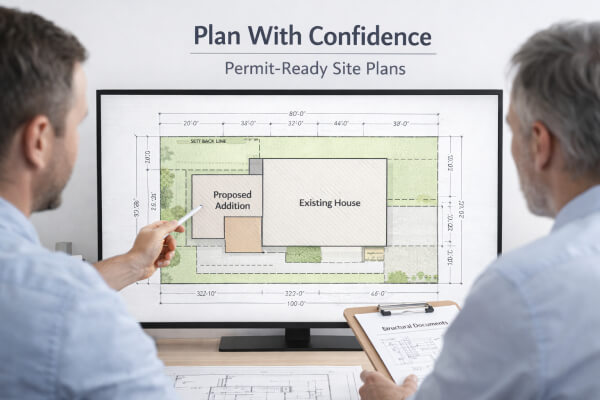
Many municipalities require a site plan when an addition expands the building footprint.
A site plan typically illustrates:
Property boundaries
Existing structures
Proposed addition dimensions
Setbacks and easements
Accurate site documentation allows reviewers to quickly verify zoning compliance, which can significantly reduce back-and-forth corrections during permit review. Knowing which permits are required is only part of the process. Preparing your documentation correctly can make a significant difference in how smoothly your application moves through review.
How to Avoid Permit Delays for a Home Addition
Home addition permit delays mechanisms
Permit delays are one of the most common reasons home addition projects fall behind schedule. While approval timelines vary by city and county, many setbacks are preventable with proper preparation before submission.
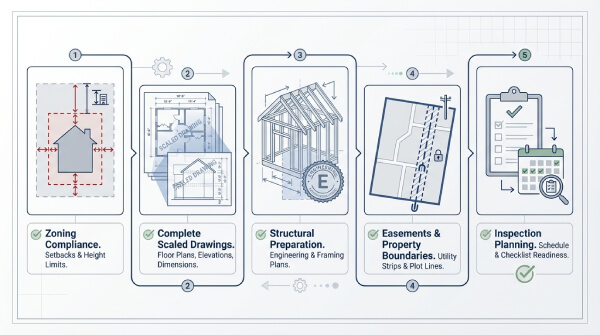
Here are the most effective ways to reduce the risk of review issues:
1. Verify Zoning Compliance Early
Confirm setback distances, lot coverage limits, and height restrictions before finalizing your design. Small dimensional conflicts can trigger revision requests.
2. Submit Complete and Scaled Drawings
Floor plans, elevation drawings, and, when required, site documentation should be clearly dimensioned and consistent across all submitted materials.
3. Address Structural Requirements in Advance
If your project involves major framing changes or a second story, ensure structural documentation is prepared before submission rather than waiting for reviewers to request it.
4. Review Utility Easements and Property Boundaries
Additions built too close to easements or incorrectly measured property lines often require redesign. Confirming boundary accuracy helps prevent costly adjustments.
5. Plan for Inspection Milestones
Even after permit approval, construction typically requires staged inspections. Coordinating scheduling and documentation early helps keep the project moving smoothly. Careful preparation doesn’t eliminate review time, but it significantly reduces the likelihood of corrections, resubmissions, and unexpected pauses during approval.
Planning Your Home Addition with GetASitePlan
Plan your home addition with GetASitePlan
A successful home addition starts with accurate planning and complete documentation. Whether you’re expanding your footprint or building upward, permit approval depends on clear drawings that demonstrate zoning compliance and structural feasibility.
GetASitePlan prepares permit-ready site plans and residential drawings for homeowners across the United States. Providing accurate, clearly dimensioned plans from the beginning helps reduce review delays and avoid costly revisions.
If you’re ready to move your home addition from concept to approved construction, preparing the right documentation is the first step.
Contributing Writer | Architecture & Design Writer
During my career, I’ve written articles on interior design, home remodeling, and renovation with an emphasis on money-saving tips and DIY ideas. It’s been a rewarding journey and I am thrilled to continue helping others bring their architectural visions to life.
Building a driveway starts well before the first load of gravel or concrete arrives. You need to choose the location and material, check drainage, identify underground utilities, prepare a stable
A foundation plan is a scaled structural drawing that shows how a building will be supported at ground level. It identifies elements such as footings, foundation walls, slabs, piers, columns,
For most new homes, a slab foundation costs less and requires less maintenance. A crawl space costs more upfront, yet provides easier access to plumbing, electrical lines, HVAC components, and